Η κύρια διαφορά μεταξύ των κλειστών και των ανοιχτών υπότιτλων είναι το αν οι θεατές μπορούν να ελέγξουν τους υπότιτλους. Οι κλειστοί υπότιτλοι (CC) υπάρχουν ως ξεχωριστό κομμάτι υποτίτλων που οι θεατές μπορούν να ενεργοποιήσουν ή να απενεργοποιήσουν, καθιστώντας τους πιο κατάλληλους για σενάρια που απαιτούν πολύγλωσσους υπότιτλους, επεξεργασίες μετά την παραγωγή και YouTube. Οι ανοιχτοί υπότιτλοι, από την άλλη πλευρά, είναι ενσωματωμένοι απευθείας στο καρέ του βίντεο και εμφανίζονται πάντα. Οι θεατές δεν μπορούν να τους απενεργοποιήσουν. Ως εκ τούτου, είναι πιο κατάλληλοι για TikTok, Instagram Reels, διαφημίσεις και βίντεο που απαιτούν ένα συνεπές στυλ υποτίτλων. Επομένως, αν δώσετε προτεραιότητα έλεγχος θεατή, πολυγλωσσική υποστήριξη και δυνατότητα επεξεργασίας υποτίτλων, επιλέξτε Υπότιτλοι. εάν δώσετε προτεραιότητα λεζάντες που είναι πάντα ορατές, οπτική συνέπεια και κοινή χρήση στα μέσα κοινωνικής δικτύωσης, επιλέξτε Άνοιγμα λεζάντων.
Πίνακας περιεχομένων
Κλειστοί υπότιτλοι vs ανοιχτοί υπότιτλοι: Γρήγορη σύγκριση
| Χαρακτηριστικό | Υπότιτλοι | Άνοιγμα υποτίτλων |
|---|---|---|
| Μπορούν οι θεατές να τα απενεργοποιήσουν; | Ναί | Οχι |
| Μέρος της εικόνας βίντεο; | Συνήθως όχι | Ναί |
| Έλεγχος θεατή | Ψηλά | Κανένας |
| Πολλαπλές γλώσσες | Ευκολότερη διαχείριση με ξεχωριστά κομμάτια υπότιτλων | Συνήθως απαιτούνται ξεχωριστές εκδόσεις βίντεο με υπότιτλους |
| Επεξεργασία μετά τη δημοσίευση | Πιο εύκολο. Μπορείτε να ενημερώσετε το αρχείο υποτίτλων | Συνήθως απαιτείται επεξεργασία και επαναφορά του βίντεο |
| Στυλ υπότιτλων | Εξαρτάται από το πρόγραμμα αναπαραγωγής, την πλατφόρμα και τη μορφή των υποτίτλων | Ελέγχετε τη γραμματοσειρά, το μέγεθος, το χρώμα, τη θέση και το οπτικό στυλ |
| Απαιτείται υποστήριξη πλατφόρμας | Ναι, το πρόγραμμα αναπαραγωγής πρέπει να υποστηρίζει υπότιτλους | Δεν απαιτείται ξεχωριστή λειτουργία υπότιτλων |
| Καλύτερο για | YouTube, μαθήματα, διαδικτυακά σεμινάρια, εκπαίδευση, πολύγλωσσο βίντεο | TikTok, βίντεο, ταινίες μικρού μήκους, διαφημίσεις, βίντεο κοινωνικής δικτύωσης |
| Η καλύτερη επιλογή όταν | Χρειάζεστε ευελιξία και έλεγχο από τον θεατή | Χρειάζεστε υπότιτλους για να παραμείνετε ορατοί |
Τι είναι οι κλειστοί και οι ανοιχτοί υπότιτλοι;
Οι κλειστοί και οι ανοιχτοί υπότιτλοι είναι και οι δύο μηνύματα κειμένου που συγχρονίζονται με τον ήχο του βίντεο. Ωστόσο, οι κλειστοί υπότιτλοι υπάρχουν ως ξεχωριστό κομμάτι υπότιτλων που οι θεατές μπορούν να ενεργοποιήσουν ή να απενεργοποιήσουν, ενώ οι ανοιχτοί υπότιτλοι επικαλύπτονται απευθείας στο βίντεο και εμφανίζονται πάντα.
Τι είναι οι κλειστοί υπότιτλοι;
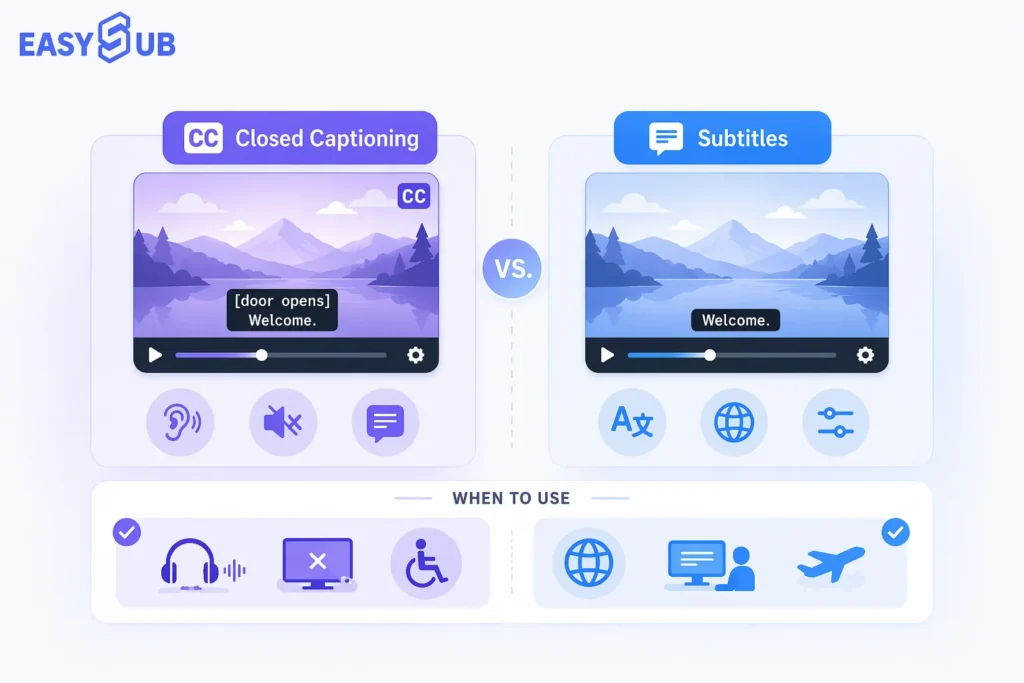
Οι κλειστοί υπότιτλοι (CC) είναι υπότιτλοι που οι θεατές μπορούν να ενεργοποιήσουν ή να απενεργοποιήσουν. Αναπαράγονται συγχρονισμένα με το βίντεο ως ξεχωριστό υπότιτλοι. Κατά την αναπαραγωγή του βίντεο, το πρόγραμμα αναπαραγωγής διαβάζει το κείμενο και τις χρονικές σημάνσεις από τους υπότιτλους και εμφανίζει το αντίστοιχο περιεχόμενο τη σωστή στιγμή.
Οι υπότιτλοι μπορούν να παραδοθούν σε διάφορες μορφές υποτίτλων. Οι δύο πιο συνηθισμένες είναι:
- SRT (.srt): Εγγράφει υπότιτλους χρησιμοποιώντας κείμενο και χρονοκώδικες. Οι μεγάλες πλατφόρμες βίντεο όπως το YouTube υποστηρίζουν αυτήν τη μορφή.
- WebVTT (.vtt): Η μορφή διαδικτυακών κομματιών κειμένου βίντεο που ορίζεται από το W3C και μπορεί να χρησιμοποιηθεί για υπότιτλους βίντεο και άλλα κομμάτια κειμένου συγχρονισμένα με χρόνο.
Επομένως, εάν χρειαστεί να δημιουργία κλειστών λεζάντων, μπορείτε πρώτα Εξαγάγετε ένα αρχείο SRT ή VTT και, στη συνέχεια, ανεβάστε το ως ξεχωριστό αρχείο υπότιτλων σε μια υποστηριζόμενη πλατφόρμα.
Τι είναι οι ανοιχτοί υπότιτλοι;
Οι ανοιχτοί υπότιτλοι είναι υπότιτλοι που είναι ενσωματωμένοι απευθείας στο καρέ του βίντεο και δεν μπορούν να απενεργοποιηθούν από τον θεατή. Το W3C ορίζει τους υπότιτλους που δεν μπορούν να απενεργοποιηθούν ως ανοιχτούς υπότιτλους.
Κατά τη δημιουργία ανοιχτών λεζάντων, οι λεζάντες αποδίδονται μαζί με το αρχικό βίντεο: μόλις ολοκληρωθεί η απόδοση, οι λεζάντες γίνονται μέρος της εικόνας του βίντεο. Το πρόγραμμα αναπαραγωγής δεν χρειάζεται πλέον να διαβάζει ξεχωριστό κομμάτι λεζάντων. Επομένως, ακόμα κι αν ανεβάσετε αυτό το βίντεο σε άλλη πλατφόρμα, οι λεζάντες θα παραμείνουν στην οθόνη.
Θα βλέπετε επίσης συχνά όρους όπως κρυμμένοι υπότιτλοι ή ενσωματωμένες λεζάντες. Αυτά περιγράφουν αυτήν τη μέθοδο μόνιμης απόδοσης υπότιτλων στο καρέ του βίντεο.
8 βασικές διαφορές μεταξύ κλειστών και ανοιχτών υπότιτλων
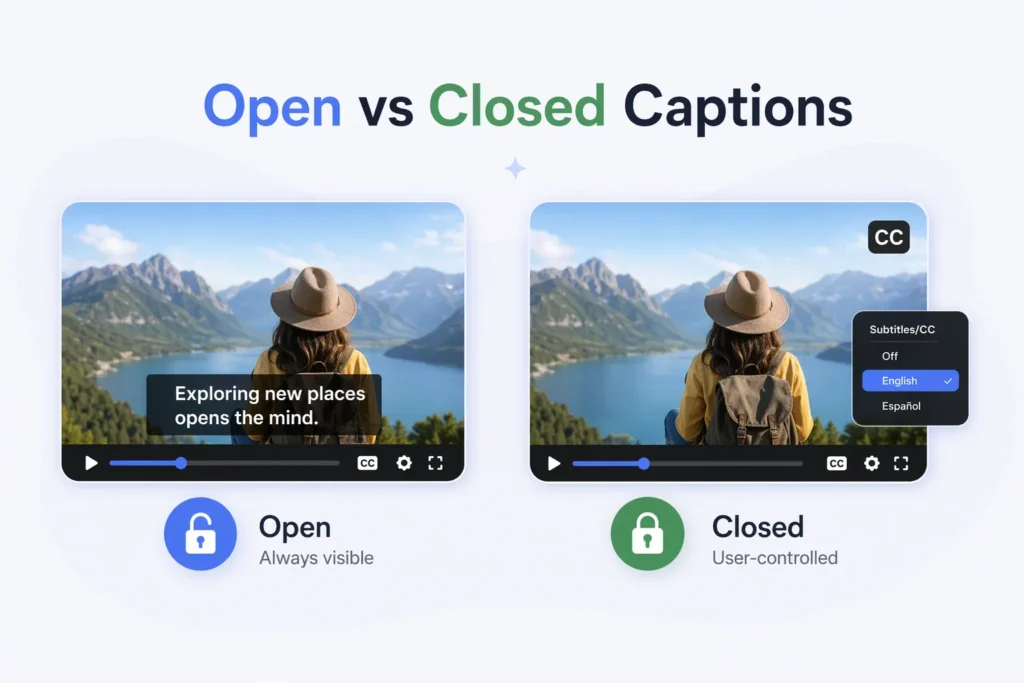
Οι κλειστοί υπότιτλοι μπορούν να ενεργοποιηθούν ή να απενεργοποιηθούν σε υποστηριζόμενα προγράμματα αναπαραγωγής, ενώ οι ανοιχτοί υπότιτλοι δεν μπορούν να απενεργοποιηθούν.
1. Έλεγχος θεατή
Οι κλειστοί υπότιτλοι δίνουν τον έλεγχο στον θεατή, ενώ οι ανοιχτοί υπότιτλοι αφήνουν την απόφαση εμφάνισης στον δημιουργό του βίντεο.
Με τους κλειστούς υπότιτλους, οι θεατές σας μπορούν να ενεργοποιήσουν ή να απενεργοποιήσουν τους υπότιτλους ανάλογα με τις ανάγκες τους. Οι ανοιχτοί υπότιτλοι, από την άλλη πλευρά, εμφανίζονται από την αρχή μέχρι το τέλος του βίντεο και δεν μπορούν να απενεργοποιηθούν από τον θεατή.
Αν το περιεχόμενό σας απευθύνεται σε κοινό με διαφορετικές συνήθειες θέασης, θα συνιστούσα τους κλειστούς υπότιτλους. Για περιεχόμενο όπως διαφημίσεις και σύντομα βίντεο, όπου είναι απαραίτητο να διασφαλιστεί η ορατότητα του κειμένου, οι ανοιχτοί υπότιτλοι είναι πιο κατάλληλοι.
2. Πώς αποθηκεύονται οι υπότιτλοι
Οι κλειστοί υπότιτλοι συνήθως υπάρχουν ως ξεχωριστό κομμάτι υπότιτλων. Οι ανοιχτοί υπότιτλοι ενσωματώνονται απευθείας στο ίδιο το βίντεο.
Οι κλειστοί υπότιτλοι μπορούν να συγχρονιστούν με το βίντεο μέσω ενός αρχείου υπότιτλων που περιέχει κείμενο και χρονοκώδικες. Το YouTube εξηγεί ότι τα αρχεία υπότιτλων καταγράφουν το κείμενο των υπότιτλων και τον χρόνο εμφάνισής τους και υποστηρίζουν τη μεταφόρτωση ξεχωριστών αρχείων υπότιτλων.
Από την άλλη πλευρά, οι ανοιχτοί υπότιτλοι αποδίδονται απευθείας στο βίντεο κατά την εξαγωγή. Μόλις ολοκληρωθεί αυτό, το πρόγραμμα αναπαραγωγής βλέπει την τυπική εικόνα βίντεο αντί για ένα ξεχωριστό κομμάτι υπότιτλων που μπορεί να ελεγχθεί ανεξάρτητα.
3. Στυλ λεζάντας
Αν σας ενδιαφέρει ο οπτικός σχεδιασμός των λεζάντων σας, οι ανοιχτοί υπότιτλοι συνήθως σας δίνουν μεγαλύτερο έλεγχο. Μπορείτε να προσαρμόσετε τη γραμματοσειρά, το μέγεθος γραμματοσειράς, το χρώμα, τη θέση, το φόντο, την επισήμανση λέξεων-κλειδιών και τα εφέ κίνησης για να διασφαλίσετε ότι οι λεζάντες ταιριάζουν με το στυλ του βίντεό σας. Αντίθετα, η τελική εμφάνιση των Υπότιτλων επηρεάζεται από τη μορφή των υποτίτλων, το πρόγραμμα αναπαραγωγής πολυμέσων, την πλατφόρμα και τις ρυθμίσεις του θεατή. Ορισμένες συσκευές υποστηρίζουν προσαρμογές στη γραμματοσειρά, το μέγεθος γραμματοσειράς, το χρώμα κειμένου, το χρώμα φόντου και τη διαφάνεια, επομένως δεν μπορείτε να εγγυηθείτε ότι οι Υπότιτλοι θα εμφανίζονται ακριβώς με τον ίδιο τρόπο σε όλες τις συσκευές.
4. Πολλαπλές γλώσσες
Εάν ένα βίντεο πρέπει να είναι διαθέσιμο σε πολλές γλώσσες, συνιστάται γενικά να δίνετε προτεραιότητα στους υπότιτλους. Μπορείτε να διατηρήσετε το ίδιο βίντεο και να προσθέσετε ξεχωριστά κομμάτια υπότιτλων σε διαφορετικές γλώσσες—όπως Αγγλικά, Ισπανικά, Γαλλικά ή Γερμανικά—επιτρέποντας στους θεατές να επιλέξουν απευθείας την προτιμώμενη γλώσσα τους. Οι ανοιχτοί υπότιτλοι λειτουργούν διαφορετικά, επειδή οι υπότιτλοι αποδίδονται απευθείας στο καρέ του βίντεο. Εάν χρειάζεστε τέσσερις γλώσσες, συνήθως θα πρέπει να εξαγάγετε τέσσερις ξεχωριστές εκδόσεις του βίντεο με υπότιτλους.
5. Επεξεργασία και Ενημέρωση
Οι υπότιτλοι είναι πιο κατάλληλοι για περιεχόμενο που απαιτεί συνεχείς αναθεωρήσεις υποτίτλων.
Ας υποθέσουμε ότι οι υπότιτλοι του βίντεο μεταγράφονται λανθασμένα “50 πελάτες” ως “15 πελάτες.” Αν χρησιμοποιείτε υπότιτλους, συνήθως χρειάζεται μόνο να επεξεργαστείτε ή να αντικαταστήσετε το κομμάτι των υπότιτλων—χωρίς να χρειάζεται να δημιουργήσετε ξανά ολόκληρο το βίντεο. Ωστόσο, αν το κείμενο έχει ήδη εγγραφεί στο βίντεο ως ανοιχτοί υπότιτλοι, συνήθως θα πρέπει να επεξεργαστείτε τους υπότιτλους, να επαναλάβετε την απόδοση του βίντεο και, στη συνέχεια, να εξαγάγετε μια νέα έκδοση.
Επομένως, για μαθήματα, εκπαιδευτικό υλικό, παρουσιάσεις προϊόντων και περιεχόμενο που ενημερώνεται συχνά, συνιστώ να διατηρείτε ξεχωριστό αρχείο λεζάντων.
6. Συμβατότητα πλατφόρμας
Οι κλειστοί υπότιτλοι βασίζονται στη λειτουργικότητα υποτίτλων του προγράμματος αναπαραγωγής, ενώ οι ανοιχτοί υπότιτλοι γενικά δεν απαιτούν πρόσθετη υποστήριξη υποτίτλων.
Για να λειτουργούν σωστά οι Υπότιτλοι, η πλατφόρμα δημοσίευσης πρέπει να μπορεί να διαβάσει το αντίστοιχο αρχείο υποτίτλων. Οι υποστηριζόμενες μορφές αρχείων ενδέχεται να διαφέρουν ανάλογα με την πλατφόρμα. Για παράδειγμα, το YouTube υποστηρίζει πολλαπλές μορφές υποτίτλων, συμπεριλαμβανομένων των SRT και WebVTT.
Οι ανοιχτοί υπότιτλοι είναι ήδη ενσωματωμένοι στο καρέ του βίντεο. Εφόσον το βίντεο αναπαράγεται κανονικά, οι υπότιτλοι θα εμφανίζονται συνήθως και αυτοί.
7. Προσβασιμότητα και Προτιμήσεις Θεατή
Το πλεονέκτημα των κλειστών υπότιτλων είναι ότι οι θεατές έχουν περισσότερο έλεγχο. Το πλεονέκτημα των ανοιχτών υπότιτλων είναι ότι οι υπότιτλοι δεν εξαφανίζονται εάν ο χρήστης δεν έχει ενεργοποιήσει τους υπότιτλους.
8. Ροή εργασίας παραγωγής
Οι κλειστοί υπότιτλοι συνήθως ακολουθούν αυτήν τη ροή εργασίας: Δημιουργία → Επεξεργασία → Εξαγωγή SRT/VTT → Μεταφόρτωση κομματιού υποτίτλων
Οι ανοιχτοί υπότιτλοι συνήθως ακολουθούν αυτήν τη ροή εργασίας: Δημιουργία → Επεξεργασία → Στυλ → Εγγραφή σε βίντεο → Εξαγωγή
Είναι καλύτεροι οι ανοιχτοί ή οι κλειστοί υπότιτλοι;
Για τους περισσότερους χρήστες που χρειάζεται να δημοσιεύουν, να διαχειρίζονται ή να μεταφράζουν βίντεο μακροπρόθεσμα, συνιστώ τους κλειστούς υπότιτλους. Αν ο κύριος στόχος σας είναι να διατηρείτε τους υπότιτλους ορατούς ανά πάσα στιγμή και να τους ενσωματώνετε στον οπτικό σχεδιασμό του βίντεο, οι ανοιχτοί υπότιτλοι είναι η καλύτερη επιλογή. Το W3C κάνει επίσης σαφή διάκριση μεταξύ των δύο: Οι κλειστές λεζάντες μπορούν να εμφανιστούν ή να κρυφτούν από τον θεατή, ενώ οι ανοιχτές λεζάντες εμφανίζονται πάντα.
Πότε πρέπει να χρησιμοποιείτε κλειστούς υπότιτλους;
Αν δημοσιεύετε βίντεο YouTube μεγάλης διάρκειας, διαδικτυακά μαθήματα, διαδικτυακά σεμινάρια, εκπαιδευτικά βίντεο ή πολύγλωσσο περιεχόμενο, Συνιστώ τη χρήση κλειστών υπότιτλων. Αυτό επιτρέπει στους θεατές να αποφασίσουν εάν θα εμφανίσουν υπότιτλους και διευκολύνει την επεξεργασία και τη διαχείριση διαφορετικών γλωσσικών εκδόσεων αργότερα.
- Θέλετε οι θεατές να μπορούν να ενεργοποιούν ή να απενεργοποιούν τους υπότιτλους
- Ένα μόνο βίντεο πρέπει να υποστηρίζει πολλές γλώσσες
- Οι υπότιτλοι ενδέχεται να χρειαστεί να υποστούν επεξεργασία στο μέλλον
- Πρέπει να διαχειρίζεστε μεγάλο όγκο περιεχομένου βίντεο μακροπρόθεσμα
- Δημοσιεύετε μαθήματα, εκπαιδευτικά βίντεο, διαδικτυακά σεμινάρια ή βίντεο YouTube μεγάλης διάρκειας
Πότε πρέπει να χρησιμοποιείτε ανοιχτούς υπότιτλους;
- Όταν δημιουργείτε σύντομα βίντεο όπως το TikTok, το Instagram Reels ή το YouTube Shorts
- Δημιουργία διαφημίσεων ή προωθητικών βίντεο στα μέσα κοινωνικής δικτύωσης
- Πότε πρέπει πάντα να εμφανίζονται υπότιτλοι
- Όταν χρειάζεστε συνεπή έλεγχο της γραμματοσειράς, του χρώματος, της θέσης, της επισήμανσης ή των εφέ κίνησης
- Όταν θέλετε οι υπότιτλοι να αποτελούν μέρος του οπτικού σχεδιασμού του βίντεο
- Όταν δεν θέλετε να βασίζεστε στους θεατές για να ενεργοποιήσουν χειροκίνητα τους υπότιτλους
- Όταν η πλατφόρμα δημοσίευσης δεν διαθέτει αξιόπιστη εναλλαγή υποτίτλων ή υποστήριξη κομματιού υποτίτλων
Κλειστές έναντι ανοιχτών λεζάντων ανά πλατφόρμα και περίπτωση χρήσης
| Πλατφόρμα / Περίπτωση Χρήσης | Συνιστάται | Γιατί |
|---|---|---|
| Βίντεο μεγάλης διάρκειας στο YouTube | Κλειστά / Και τα δύο | Το YouTube υποστηρίζει ξεχωριστά κομμάτια υπότιτλων και πολύγλωσσες υπότιτλους. Μπορείτε να επεξεργαστείτε υπότιτλους κατά την επεξεργασία μετά την παραγωγή χωρίς να χρειάζεται να επανεξάγετε ολόκληρο το βίντεο. |
| TikTok | Ανοιχτό | Τα σύντομα βίντεο πρέπει να μεταφέρουν πληροφορίες γρήγορα. Η εμφάνιση λεζάντων απευθείας στην οθόνη διασφαλίζει ότι οι θεατές βλέπουν το κείμενο και βοηθά στη διατήρηση ενός συνεπούς οπτικού στυλ. |
| Instagram Reels | Ανοιχτό | Αν οι λεζάντες χρησιμεύουν ως πληροφοριακά μηνύματα, επισημαίνουν λέξεις-κλειδιά ή παρέχουν οπτική καθοδήγηση, οι ανοιχτοί υπότιτλοι είναι πιο κατάλληλοι για τη διατήρηση μιας συνεπούς εμφάνισης. |
| YouTube Shorts | Άνοιγμα / Και τα δύο | Χρησιμοποιήστε ανοιχτούς υπότιτλους εάν οι υπότιτλοι αποτελούν μέρος του σχεδιασμού του βίντεο. Εάν χρειάζεστε επίσης τις λειτουργίες υπότιτλων της πλατφόρμας, μπορείτε να παρέχετε και κλειστούς υπότιτλους. |
| Διαδικτυακά Μαθήματα | Κλειστό | Τα μαθήματα συνήθως απαιτούν μακροπρόθεσμη συντήρηση, πολύγλωσσες εκδόσεις και αναθεωρήσεις υποτίτλων. Ένα ξεχωριστό αρχείο υποτίτλων είναι πιο εύκολο στη διαχείριση. |
| Διαδικτυακά σεμινάρια | Κλειστό | Το περιεχόμενο των εγγεγραμμένων διαδικτυακών σεμιναρίων συχνά απαιτεί επεξεργασία, μετάφραση ή επαναχρησιμοποίηση του περιεχομένου των λεζάντων. Οι κλειστοί υπότιτλοι είναι πιο κατάλληλοι για συντήρηση μετά την παραγωγή. |
| Εταιρική Εκπαίδευση | Κλειστό | Το εκπαιδευτικό περιεχόμενο μπορεί να ενημερώνεται τακτικά ή να απευθύνεται σε υπαλλήλους που μιλούν διαφορετικές γλώσσες. Οι ξεχωριστοί υπότιτλοι προσφέρουν μεγαλύτερη ευελιξία. |
| Διαφημίσεις βίντεο | Ανοιχτό | Οι βασικές πληροφορίες στις διαφημίσεις δεν μπορούν να βασίζονται στην ενεργή ενεργοποίηση των υπότιτλων από τους θεατές. Οι ανοιχτοί υπότιτλοι διασφαλίζουν ότι οι υπότιτλοι εμφανίζονται πάντα. |
| Δημόσιες Επιδείξεις | Ανοιχτό | Σε περιβάλλοντα όπως οθόνες εμπορικών εκθέσεων και εμπορικών κέντρων, οι θεατές συνήθως δεν μπορούν να ελέγξουν τις ρυθμίσεις των υπότιτλων, επομένως οι ανοιχτοί υπότιτλοι—οι οποίοι εμφανίζονται πάντα—είναι πιο πρακτικοί. |
| Πολύγλωσσο Περιεχόμενο | Κλειστό | Μπορείτε να διαχειριστείτε υπότιτλους σε πολλές γλώσσες για το ίδιο βίντεο χωρίς να χρειάζεται να δημιουργήσετε ξανά ολόκληρο το βίντεο για κάθε γλώσσα. Το YouTube υποστηρίζει την προσθήκη υπότιτλων σε διαφορετικές γλώσσες σε βίντεο. |
Κλειστοί έναντι ανοιχτών υπότιτλων για προσβασιμότητα
Τόσο οι κλειστοί όσο και οι ανοιχτοί υπότιτλοι μπορούν να βελτιώσουν την προσβασιμότητα του βίντεο. Το κλειδί είναι αν οι υπότιτλοι είναι ακριβείς, συγχρονισμένοι, πλήρεις και ευανάγνωστοι. Το WCAG 2.2 απαιτεί το ηχητικό περιεχόμενο σε προηχογραφημένα συγχρονισμένα μέσα να παρέχεται με λεζάντες, αλλά δεν καθορίζει ότι πρέπει να χρησιμοποιούνται μόνο κλειστές λεζάντες. Το W3C αναγνωρίζει τόσο τις κλειστές λεζάντες (οι οποίες μπορούν να απενεργοποιηθούν) όσο και τις ανοιχτές λεζάντες (οι οποίες δεν μπορούν να απενεργοποιηθούν).
Είναι οι υπότιτλοι πιο προσβάσιμοι;
Αν θέλετε να δώσετε στους θεατές περισσότερο έλεγχο, προτείνω τους κλειστούς υπότιτλους. Οι χρήστες μπορούν να ενεργοποιήσουν ή να απενεργοποιήσουν τους υπότιτλους ανάλογα με τις ανάγκες τους. Σε συσκευές αναπαραγωγής και συσκευές που υποστηρίζουν αυτήν τη λειτουργία, οι χρήστες μπορούν επίσης να προσαρμόσουν τον τρόπο εμφάνισης των υπότιτλων. Ωστόσο, οι υπότιτλοι θα πρέπει επίσης να περιλαμβάνουν σημαντικούς μη λεκτικούς ήχους που είναι απαραίτητοι για την κατανόηση του βίντεο, όπως μουσική, γέλιο, ηχητικά εφέ και πληροφορίες ομιλητή.
Είναι προσβάσιμοι οι ανοιχτοί υπότιτλοι;
Ναι, οι ανοιχτοί υπότιτλοι παρέχουν επίσης πλεονεκτήματα προσβασιμότητας. Οι υπότιτλοι εμφανίζονται μόνιμα στο βίντεο, επομένως οι θεατές δεν χρειάζεται να αναζητήσουν κουμπί CC ή να τους ενεργοποιήσουν χειροκίνητα.
Τι κάνει μια λεζάντα υψηλής ποιότητας;
Είτε επιλέξετε κλειστούς είτε ανοιχτούς υπότιτλους, θα πρέπει να διαθέτουν τα ακόλουθα χαρακτηριστικά:
- Ακρίβεια: Οι λεζάντες πρέπει να μεταφέρουν με ακρίβεια τους διαλόγους, τα ονόματα, τους αριθμούς και τους σημαντικούς ήχους που είναι απαραίτητοι για την κατανόηση του περιεχομένου.
- Συγχρονισμός: Οι υπότιτλοι θα πρέπει να είναι όσο το δυνατόν πιο συγχρονισμένοι με τον αντίστοιχο λόγο και τα οπτικά στοιχεία. Οι αισθητές καθυστερήσεις ή οι προκαταβολές δυσκολεύουν τους θεατές να κατανοήσουν το περιεχόμενο.
- Πληρότητα: Μην παραλείπετε μέρη του διαλόγου. Όλες οι ομιλίες, τα σημαντικά ηχητικά εφέ και άλλες ηχητικές πληροφορίες που είναι απαραίτητες για την κατανόηση του βίντεο θα πρέπει να παρουσιάζονται πλήρως. Η FCC αναφέρει επίσης την πληρότητα ως πρότυπο ποιότητας υποτίτλων.
- Ευανάγνωστο: Οι λεζάντες θα πρέπει να είναι εύκολα στην ανάγνωση και γρήγορη. Αποφύγετε την υπερβολική χρήση κειμένου σε μία μόνο οθόνη, τη σύνθετη μορφοποίηση ή την έλλειψη οπτικής αντίθεσης με το φόντο. Για τους ανοιχτούς υπότιτλους, πρέπει να ελέγχετε ιδιαίτερα τη γραμματοσειρά, το μέγεθος και το φόντο για να διασφαλίσετε ότι το κείμενο παραμένει ευανάγνωστο σε διαφορετικές σκηνές.
- Τοποθέτηση: Οι υπότιτλοι δεν πρέπει να κρύβουν πρόσωπα, πληροφορίες προϊόντων, γραφήματα ή άλλα σημαντικά οπτικά στοιχεία που είναι απαραίτητα για την κατανόηση του βίντεο.
Μπορεί η Τεχνητή Νοημοσύνη να δημιουργήσει κλειστούς και ανοιχτούς υπότιτλους;
Ναι. Η Τεχνητή Νοημοσύνη μπορεί πρώτα να μεταγράψει αυτόματα τον ήχο σε ένα βίντεο για να δημιουργήσει υπότιτλους με χρονοδιάγραμμα και στη συνέχεια να τους εξάγει ως Κλειστές Λεζάντες ή Ανοιχτές Λεζάντες ανάλογα με τις ανάγκες σας. Αν χρειάζεστε υπότιτλους, μπορείτε να κατεβάσετε ανεξάρτητα αρχεία υποτίτλων όπως SRT ή VTT. Για τους ανοιχτούς υπότιτλους, οι υπότιτλοι μπορούν να αποδοθούν απευθείας στο βίντεο.
Πώς να δημιουργήσετε κλειστούς και ανοιχτούς υπότιτλους με το EasySub
Με το EasySub, μπορείτε να ολοκληρώσετε ολόκληρη τη διαδικασία στα ακόλουθα 5 βήματα:
Βήμα 1: Ανεβάστε το βίντεό σας
Ανεβάστε το αρχείο βίντεο ή ήχου στο οποίο θέλετε να προσθέσετε υπότιτλους. Το EasySub υποστηρίζει επίσης την εισαγωγή περιεχομένου μέσω συνδέσμου βίντεο YouTube.
Βήμα 2: Δημιουργήστε υπότιτλους με τεχνητή νοημοσύνη
Επιλέξτε την αρχική γλώσσα του βίντεο για να επιτρέψετε στην τεχνητή νοημοσύνη να αναγνωρίζει αυτόματα την ομιλία και να δημιουργεί υπότιτλους με χρονοδιάγραμμα. Δεν χρειάζεται να μεταγράφετε κάθε πρόταση ή να ορίζετε χειροκίνητα χρονικές σημάνσεις για κάθε γραμμή.
Βήμα 3: Έλεγχος και επεξεργασία
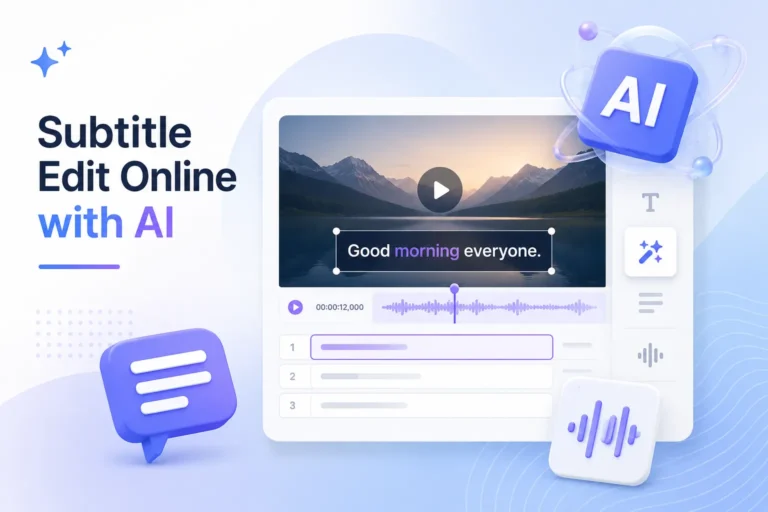
Μόλις ολοκληρωθεί η δημιουργία, ελέγξτε το κείμενο, τη χρονογραμμή, τα κύρια ονόματα, τους αριθμούς και τους τεχνικούς όρους. Εάν η Τεχνητή Νοημοσύνη κάνει σφάλματα, μπορείτε να επεξεργαστείτε απευθείας το κείμενο των λεζάντων και τις χρονικές σημάνσεις. Το EasySub προσφέρει προς το παρόν μια λειτουργία επεξεργασίας λεζάντων στο διαδίκτυο.
Βήμα 4: Μεταφράστε εάν χρειάζεται
Εάν το βίντεό σας προορίζεται για κοινό που μιλάει διαφορετικές γλώσσες, μπορείτε να προχωρήσετε στη μετάφραση των υπότιτλων. Η τρέχουσα σελίδα εργαλείων του EasySub υποστηρίζει μετάφραση σε πάνω από 150 γλώσσες, επιτρέποντάς σας να χειρίζεστε πολύγλωσσο περιεχόμενο εντός της ίδιας ροής εργασίας υπότιτλων.
Βήμα 5: Επιλέξτε την έξοδο σας
Αν χρειάζεστε Υπότιτλοι, μπορείτε να κατεβάσετε μεμονωμένα αρχεία υποτίτλων όπως SRT ή VTT και στη συνέχεια να τα ανεβάσετε σε πλατφόρμες που υποστηρίζουν κομμάτια υποτίτλων.
Αν χρειάζεστε Άνοιγμα υποτίτλων, μπορείτε να εξαγάγετε τους επεξεργασμένους υπότιτλους απευθείας στο βίντεο, καθιστώντας τους υπότιτλους μέρος του τελικού καρέ του βίντεο. Το EasySub υποστηρίζει προς το παρόν τόσο τις λήψεις αρχείων υποτίτλων όσο και την εξαγωγή βίντεο με υπότιτλους.
Δημιουργήστε κλειστούς ή ανοιχτούς υπότιτλους με το EasySub
Με το EasySub, μπορείτε πρώτα να δημιουργήσετε υπότιτλους χρησιμοποιώντας την Τεχνητή Νοημοσύνη, στη συνέχεια να τους διορθώσετε, να τους μεταφράσετε και να τους επεξεργαστείτε και, τέλος, να κατεβάσετε τα αρχεία υπότιτλων ή να εξαγάγετε απευθείας το βίντεο με υπότιτλους με βάση την πλατφόρμα δημοσίευσης που χρησιμοποιείτε.
Δημιουργήστε, επεξεργαστείτε, μεταφράστε και εξαγάγετε λεζάντες βίντεο με τεχνητή νοημοσύνη.
Κλειστοί υπότιτλοι vs ανοιχτοί υπότιτλοι: Συχνές ερωτήσεις
Ε1: Ποια είναι η διαφορά μεταξύ ανοιχτών και κλειστών λεζάντων;
Οι ανοιχτοί υπότιτλοι εμφανίζονται μόνιμα στην οθόνη βίντεο, ενώ οι κλειστοί υπότιτλοι μπορούν να ενεργοποιηθούν ή να απενεργοποιηθούν από τον θεατή. Οι κλειστοί υπότιτλοι συνήθως υπάρχουν ως ξεχωριστό κομμάτι υποτίτλων. Από την άλλη πλευρά, οι ανοιχτοί υπότιτλοι αποδίδονται απευθείας στο καρέ του βίντεο.
Ε2: Είναι καλύτεροι οι ανοιχτοί ή οι κλειστοί υπότιτλοι;
Κανένα από τα δύο δεν είναι καλύτερο σε όλες τις περιπτώσεις. Αν χρειάζεστε πολυγλωσσική υποστήριξη, ενημερώσεις υποτίτλων ή έλεγχο θεατών, οι κλειστοί υπότιτλοι είναι πιο κατάλληλοι. Αν πρέπει πάντα να εμφανίζονται υπότιτλοι ή αν οι ίδιοι οι υπότιτλοι αποτελούν μέρος του οπτικού σχεδιασμού του βίντεο, οι ανοιχτοί υπότιτλοι είναι πιο πρακτικοί.
Ε3: Ποια είναι η διαφορά μεταξύ των υπότιτλων CC και OC;
Το CC συνήθως αναφέρεται σε κλειστούς υπότιτλους, ενώ το OC αναφέρεται σε ανοιχτούς υπότιτλους. Τα CC μπορούν να ενεργοποιηθούν ή να απενεργοποιηθούν σε υποστηριζόμενες συσκευές αναπαραγωγής. Τα OC εμφανίζονται πάντα και συνήθως είναι ενσωματωμένα στο καρέ του βίντεο.
Ε4: Μπορούν να απενεργοποιηθούν οι ανοιχτοί υπότιτλοι;
Οχι. Οι ανοιχτοί υπότιτλοι αποτελούν ήδη μέρος του καρέ του βίντεο, επομένως οι θεατές δεν μπορούν να τους απενεργοποιήσουν μέσω του προγράμματος αναπαραγωγής. Εάν χρειάζεστε υπότιτλους που μπορούν να ενεργοποιηθούν ή να απενεργοποιηθούν, θα πρέπει να χρησιμοποιήσετε τους κλειστούς υπότιτλους.
Ε5: Οι υπότιτλοι στο YouTube είναι ανοιχτοί ή κλειστοί;
Το YouTube υποστηρίζει τους κλειστούς υπότιτλους και μπορείτε επίσης να ανεβάσετε βίντεο που περιλαμβάνουν ήδη ανοιχτούς υπότιτλους. Αν ανεβάσετε ξεχωριστό αρχείο υποτίτλων, οι θεατές μπορούν να ελέγξουν τους υπότιτλους μέσω των ρυθμίσεων CC. Αν οι υπότιτλοι έχουν εγγραφεί στο βίντεο, είναι ανοιχτοί υπότιτλοι.
Ε6: Μπορεί η Τεχνητή Νοημοσύνη να δημιουργήσει τόσο κλειστούς όσο και ανοιχτούς υπότιτλους;
Ναί. Η τεχνητή νοημοσύνη μπορεί πρώτα να δημιουργήσει το κείμενο των λεζάντων και τη χρονογραμμή. Μπορείτε να εξαγάγετε τους λεζάντες ως αρχεία SRT ή VTT για να τους χρησιμοποιήσετε ως κλειστούς υπότιτλους ή να τους αποδώσετε απευθείας στο βίντεο για να δημιουργήσετε ανοιχτούς υπότιτλους.
συμπέρασμα
Οι κλειστοί υπότιτλοι είναι πιο κατάλληλοι για βίντεο που απαιτούν έλεγχο από τον θεατή, πολυγλωσσική υποστήριξη και μακροπρόθεσμη διαχείριση υπότιτλων. Οι ανοιχτοί υπότιτλοι είναι πιο κατάλληλοι για βίντεο που απαιτούν την εμφάνιση υπότιτλων ανά πάσα στιγμή, έχουν σταθερό στυλ ή προορίζονται για κοινή χρήση στα μέσα κοινωνικής δικτύωσης.
Με το EasySub, μπορείτε να χρησιμοποιήσετε την Τεχνητή Νοημοσύνη για να δημιουργήσετε αυτόματα υπότιτλους, να τους επεξεργαστείτε και να τους μεταφράσετε και, στη συνέχεια, εξαγωγή αρχείων υποτίτλων ή δημιουργήστε βίντεο με ενσωματωμένους υπότιτλους όπως απαιτείται.
👉 Κάντε κλικ εδώ για μια δωρεάν δοκιμή: Δημιουργήστε υπότιτλους δωρεάν
Ευχαριστώ που διαβάσατε αυτό το ιστολόγιο. Μη διστάσετε να επικοινωνήσετε μαζί μας για περισσότερες ερωτήσεις ή ανάγκες προσαρμογής!