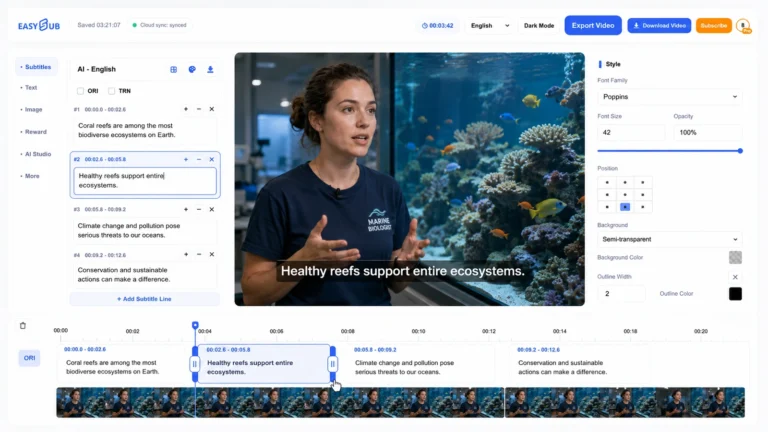
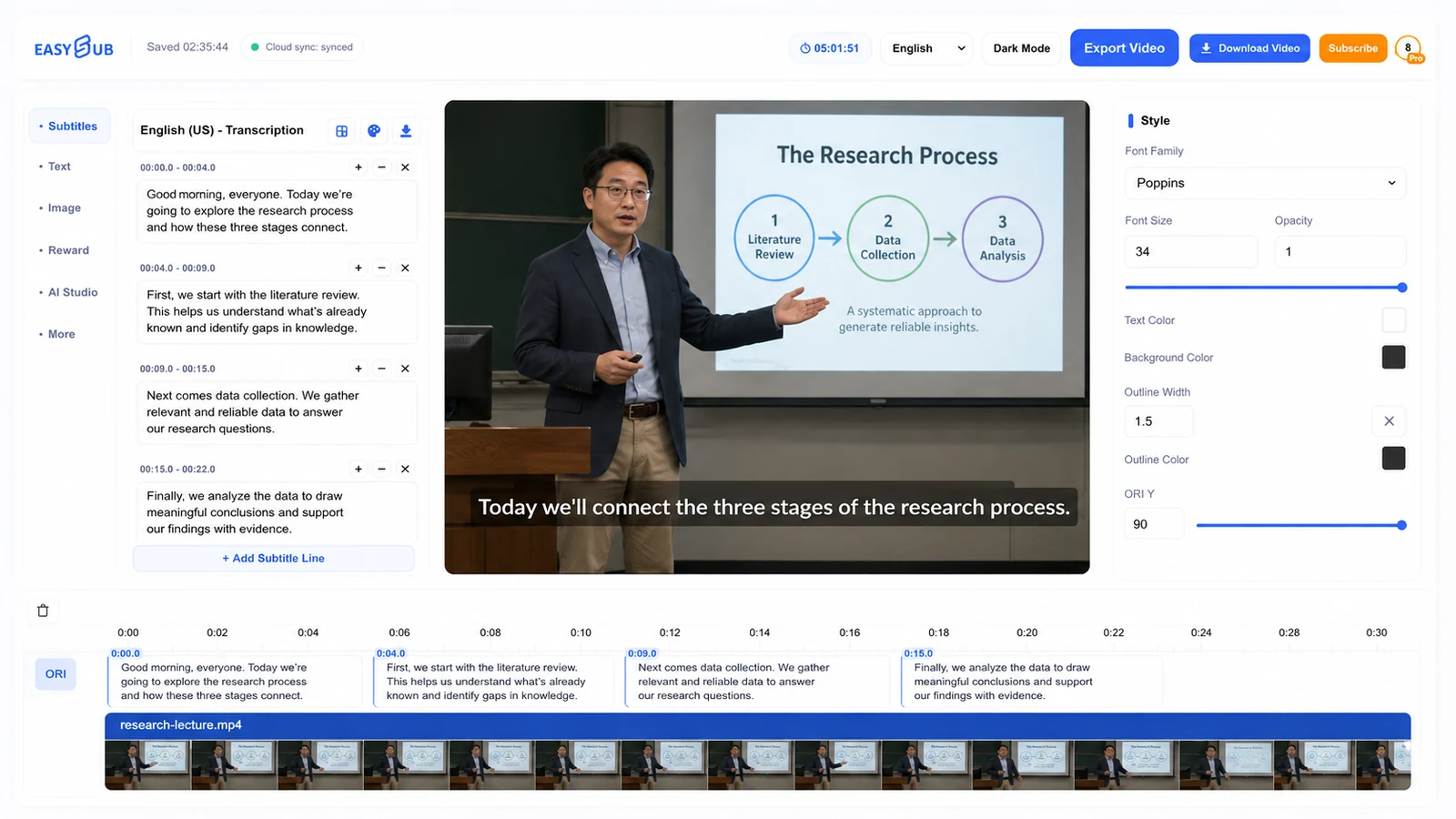
Transcribe video to text online from a local file or any YouTube/video URL. EasySub turns spoken audio into an editable transcript, keeps the text aligned with the recording, and lets you download plain TXT, timed subtitles or a captioned video after review.
How to transcribe a video to text
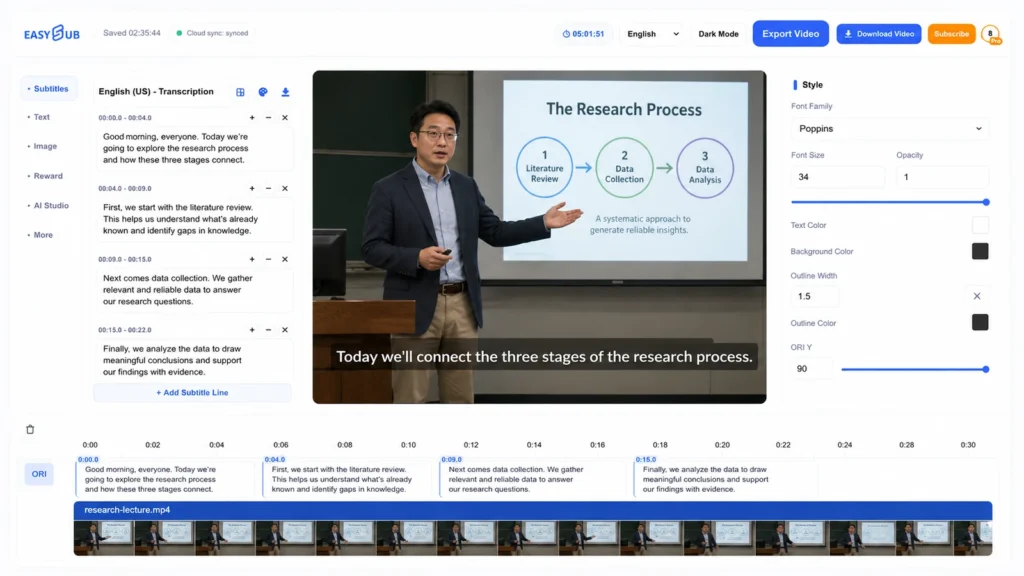
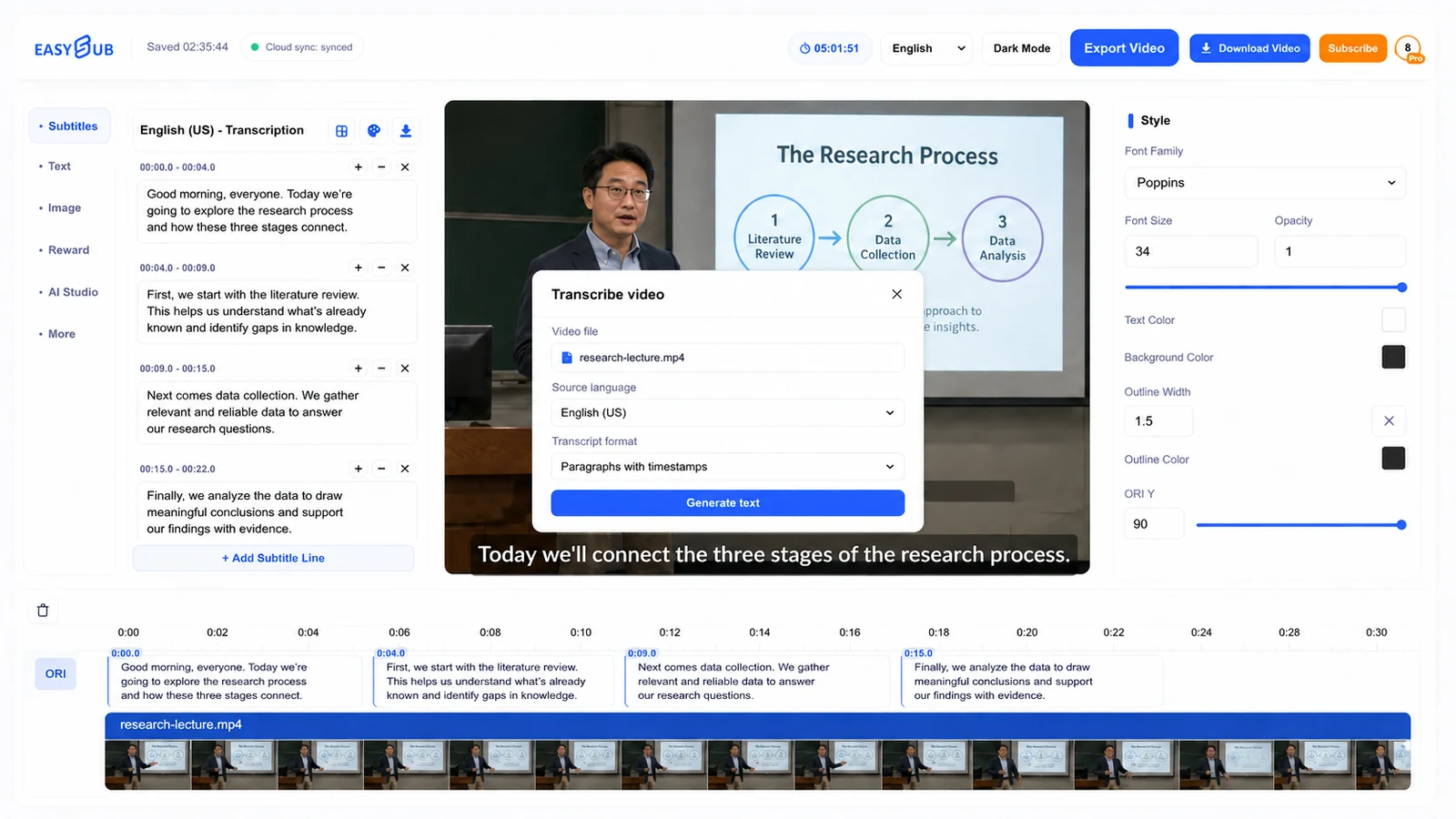
- Add the video. Open the EasySub subtitle workspace, upload a video or audio file from your device, or paste any YouTube/video URL.
- Select the spoken language. Choose the language used in the recording. If you also need another language, turn on Add translation and select the target language before generation.
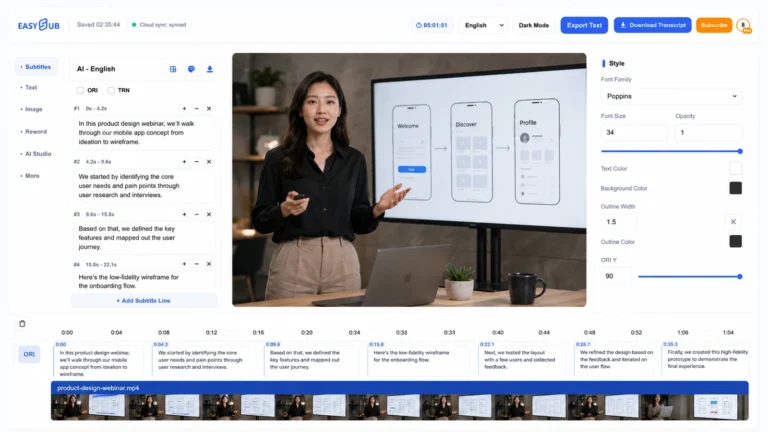
- Generate the editable transcript. EasySub analyzes the speech and creates timed text that stays connected to the corresponding part of the video.
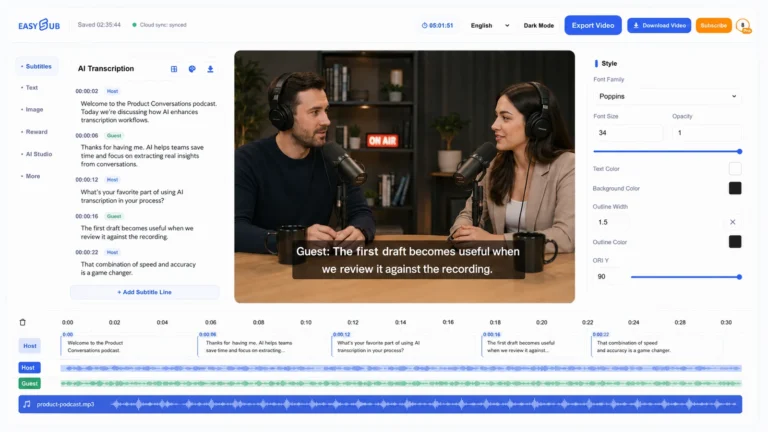
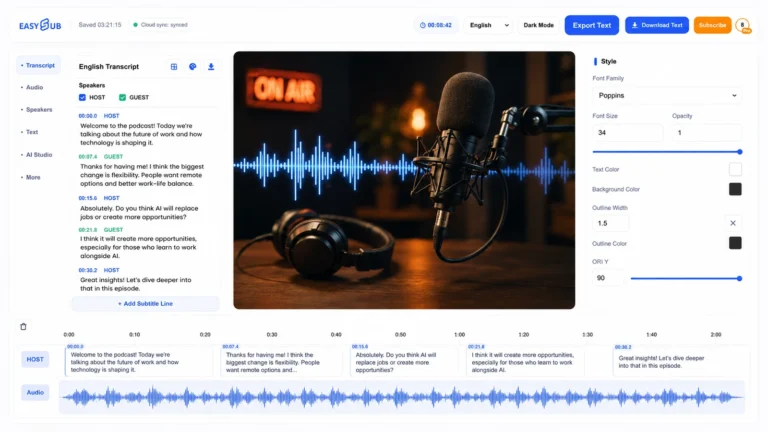
- Review while listening. Correct names, numbers, punctuation, speaker changes, negatives and specialist terms. Use the timestamps to return quickly to uncertain passages.
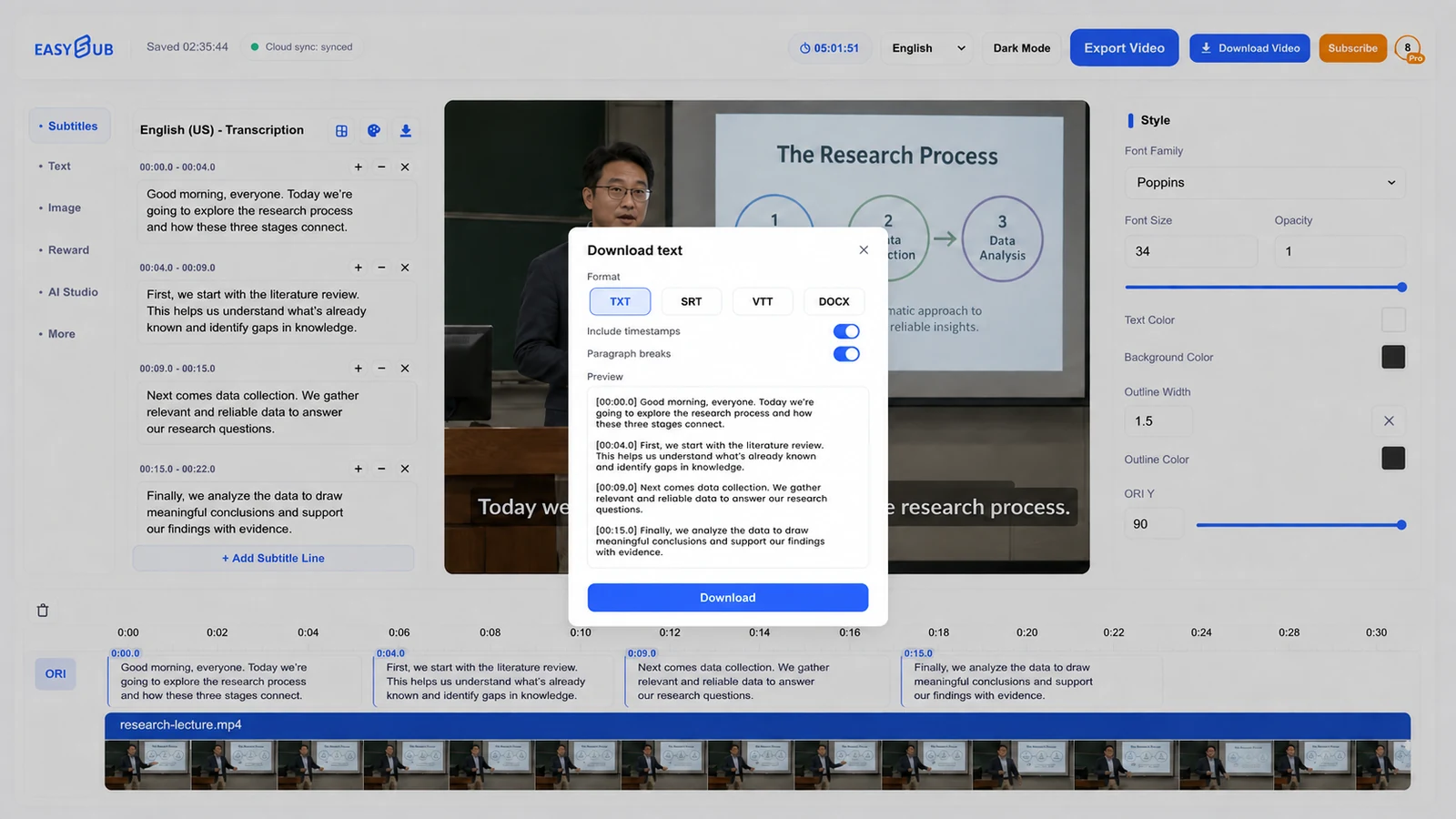
- Download the right output. Export TXT for clean reading text, SRT/VTT/ASS for timed captions, or a captioned video when subtitles should appear directly on screen.
Video transcript, subtitles and captions are related—but not identical
Video transcript
A readable written record of what was said. It can be used for notes, research, editing, indexing, summaries and content repurposing.
Subtitles
Short, timed text cues synchronized with the video. They may use the original spoken language or a translated language.
Captions
Timed on-screen text intended to make video easier to follow. A finished caption workflow may also include speaker labels and relevant non-speech sounds.
This page focuses on speech transcription: converting the audio spoken in a video into editable text. It is different from OCR, which extracts words that are already visible inside frames, slides or screenshots.
Transcribe local videos and any YouTube/video URL
You can upload a recording from your device or paste any YouTube/video URL into the project input. The same review workflow applies to interviews, tutorials, lectures, webinars, video podcasts, meetings and research recordings.
Use the clearest source available. A heavily compressed copy, loud background music, overlapping speakers or a distant microphone gives the speech model less information than the original recording.
Video transcription in 150+ languages
EasySub supports speech-to-text and subtitle workflows in more than 150 languages. Select the language actually spoken in the video; do not choose the desired translation as the source language. If the recording switches between languages, review those transitions carefully and correct names or borrowed words manually.
With clear audio, EasySub transcription can reach over 90% accuracy. Accuracy still varies with recording quality, accent, speaking pace, vocabulary and overlapping speech, so the editable draft is designed for human review before publication.
What can you download after transcription?
| Output | What it contains | Best use |
|---|---|---|
| TXT | Plain readable text without subtitle timestamps. | Notes, articles, research, quotations, editing and searchable archives. |
| SRT | Numbered subtitle cues with start and end timestamps. | YouTube, video editors, course platforms and broadly compatible players. |
| VTT | Timed WebVTT caption text. | Web players and publishing systems that request VTT. |
| ASS | Timed subtitles with additional styling information. | Players and editing workflows that support ASS styling. |
| Captioned video | A rendered video with the selected subtitle track visible on screen. | Sharing a version whose captions do not depend on a separate file. |
When a translation track exists, choose Source only, Translated only or Bilingual for the destination. TXT remains plain text; choose SRT, VTT or ASS when timing must travel with the words.
How to improve video-to-text accuracy
| Check | What to do | Why it matters |
|---|---|---|
| Audio source | Use the original video when possible and reduce competing music or noise before upload. | Clear speech improves word recognition and punctuation decisions. |
| Language | Select the language actually spoken in the recording. | The wrong language model can turn otherwise clear speech into unusable text. |
| Names and terms | Prepare the spelling of people, places, brands, acronyms and specialist vocabulary. | Rare words often sound like more common alternatives. |
| Meaning | Recheck numbers, dates, negatives, quotations and speaker changes against the video. | A small transcription error can reverse or materially change a statement. |
| Final format | Test the downloaded file in the real editor, player or publishing platform. | Correct text still needs the right timing, encoding and layout for its destination. |
Turn one video transcript into more useful content
A reviewed transcript can become an article draft, show notes, searchable meeting notes, research material, quotations, chapter markers or social clips. Start from the corrected source transcript so that every later summary, translation and derivative asset inherits reliable wording.
Interviews and research
Search long answers, mark quotations and compare speakers without replaying the entire recording for every reference.
Lectures and webinars
Create study notes, course text and accessible captions from the same reviewed transcript.
Podcasts and content
Reuse a video podcast as show notes, article sections, captions and short-form content ideas.
Choose the closest EasySub workflow
- Use Transcribe Video to Text when your main goal is an editable record of the spoken words, especially TXT plus optional timed subtitle formats.
- Use Video to Text for a shorter video-to-caption workflow when the timed subtitle result is the main deliverable.
- Use Audio to Text when the source is primarily an audio recording, voice note or podcast file.
- Use the Subtitle Editor when timed text already exists and your main job is correcting wording, timing or layout.
- Use the Subtitle Translator or Video Translator when the central goal is another language.
- Use the AI Subtitle Generator when you want the broad automatic-caption workflow rather than a transcript-first explanation.
Is video transcription free?
Yes. Free EasySub accounts receive a fixed 30 minutes of processing time each month, so you can start with a short recording before choosing a paid plan for larger workloads. Processing time is measured from the media you submit; review and editing inside the project help you turn those generated minutes into a publication-ready result.
Convert your video into editable text
Upload a file or paste any YouTube/video URL, select the spoken language, generate the transcript, review it with the recording and download TXT or timed subtitles.