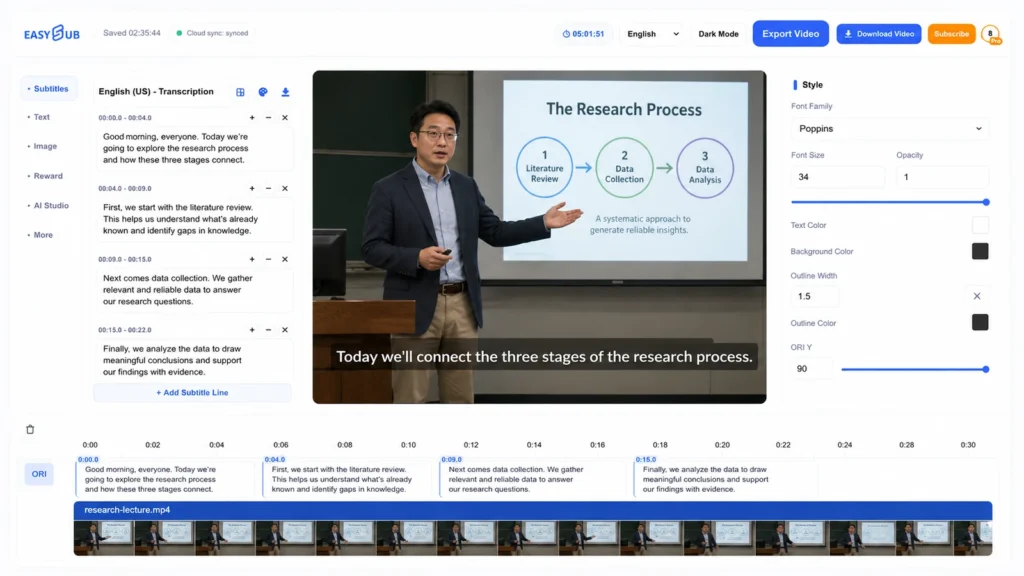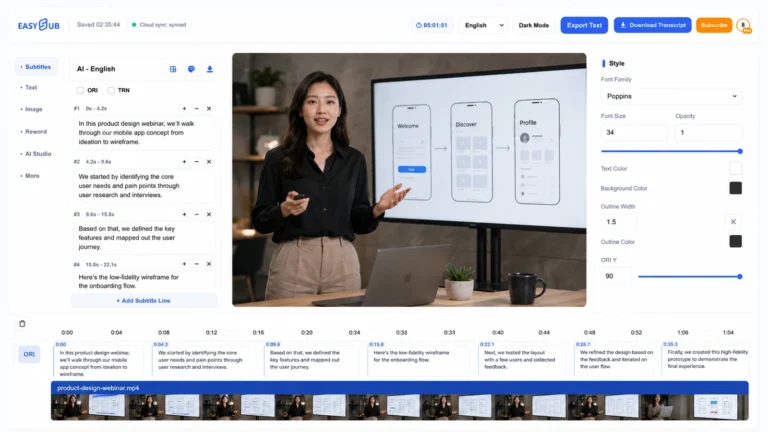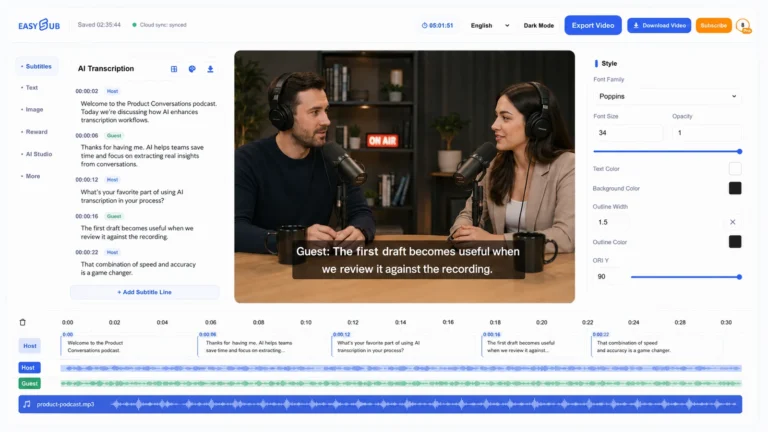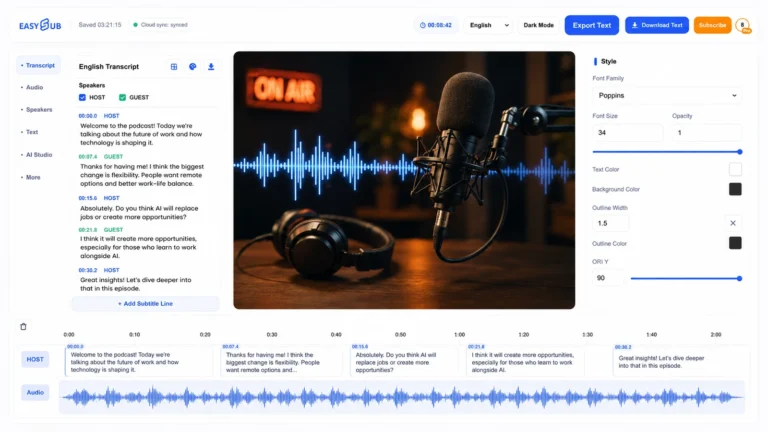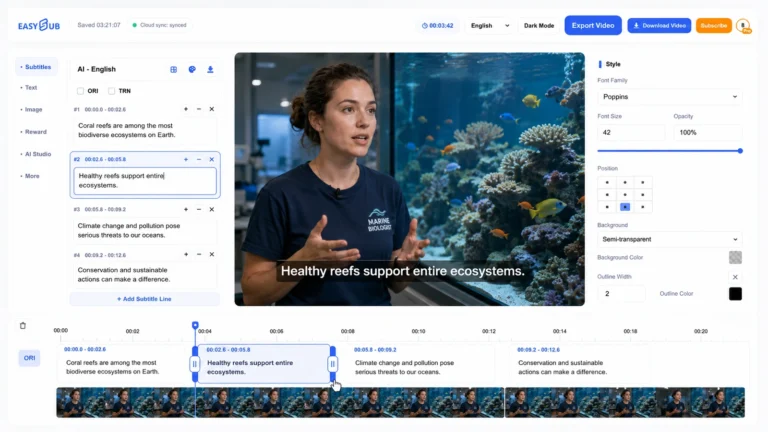
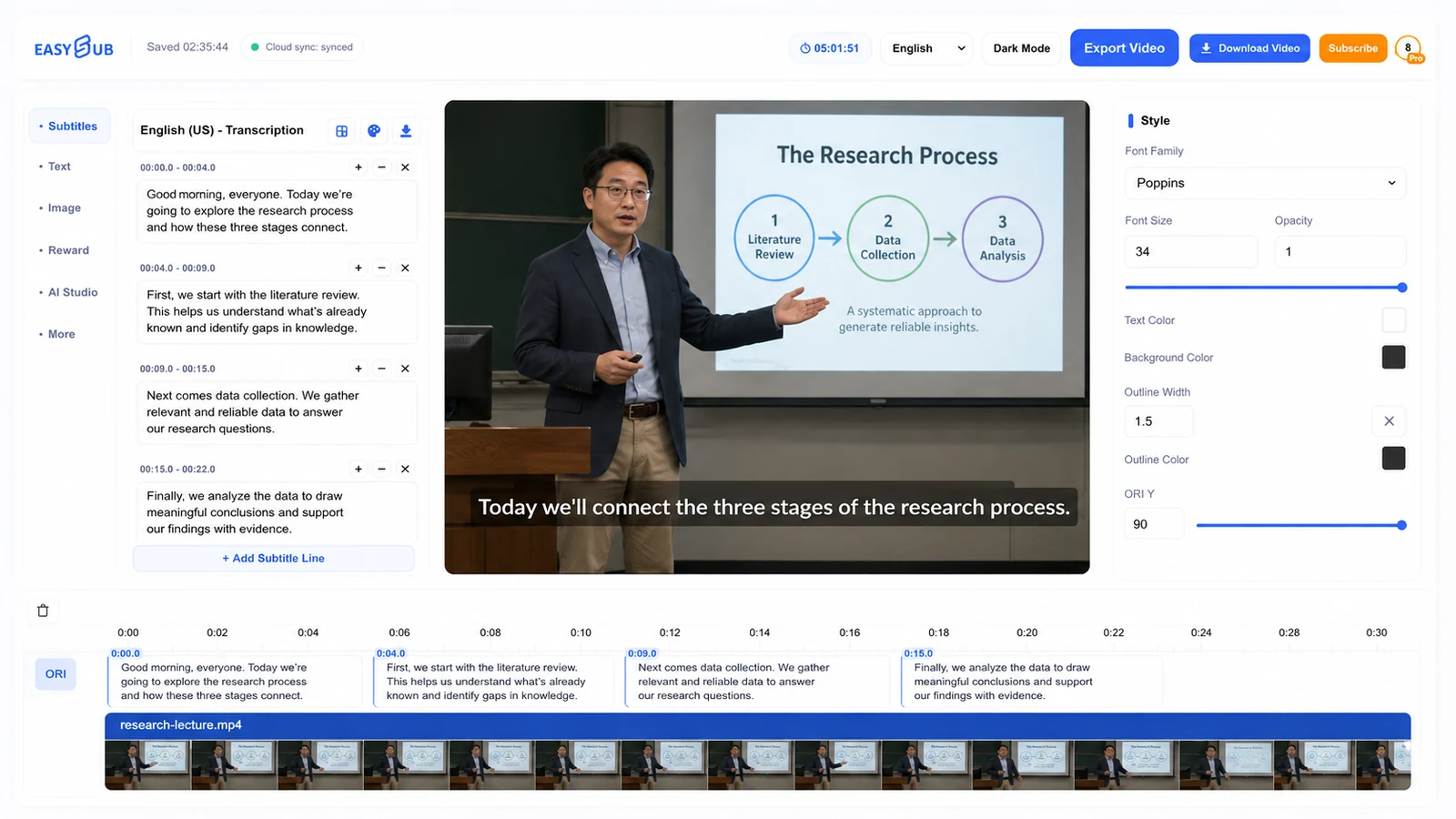
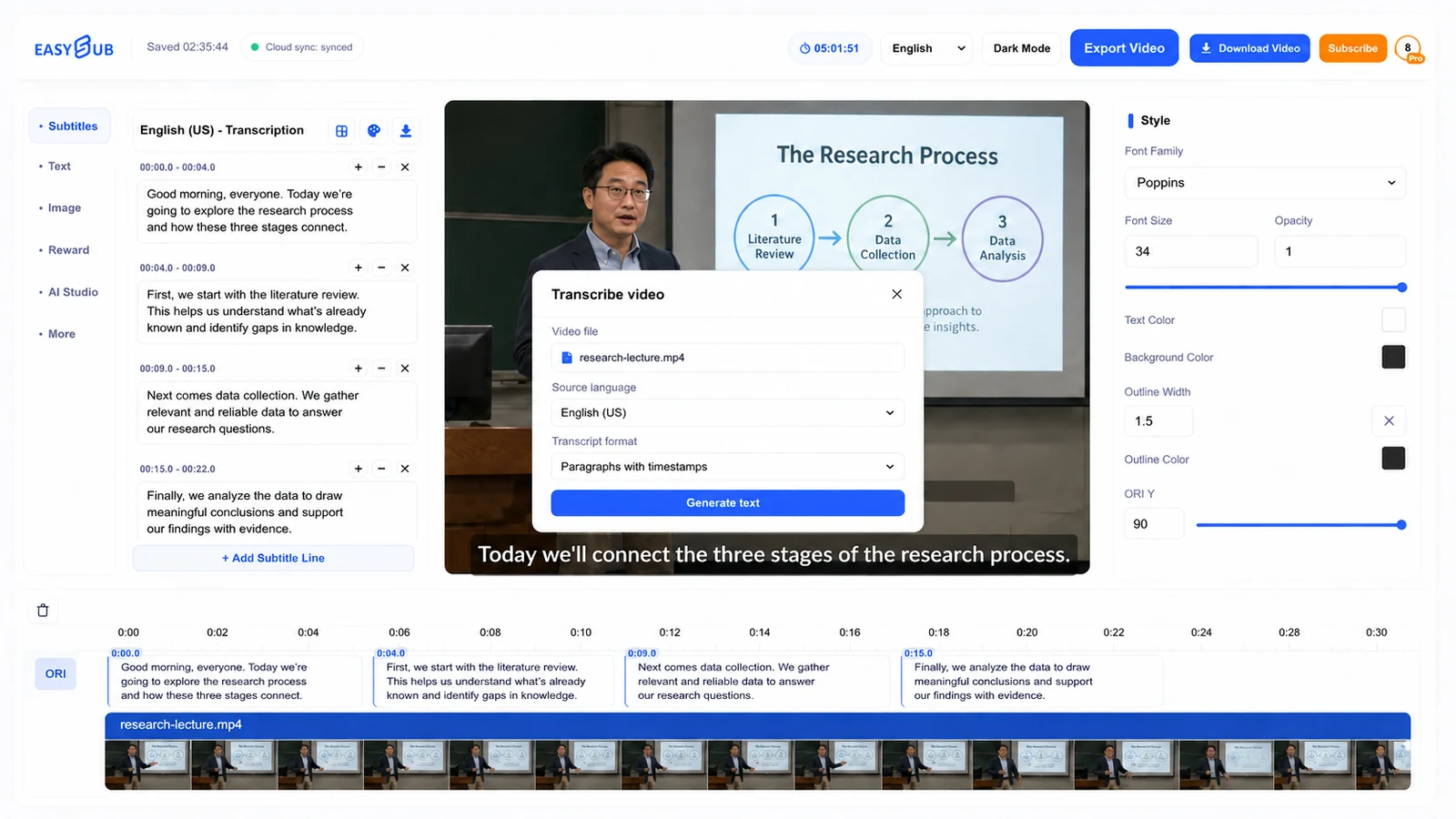
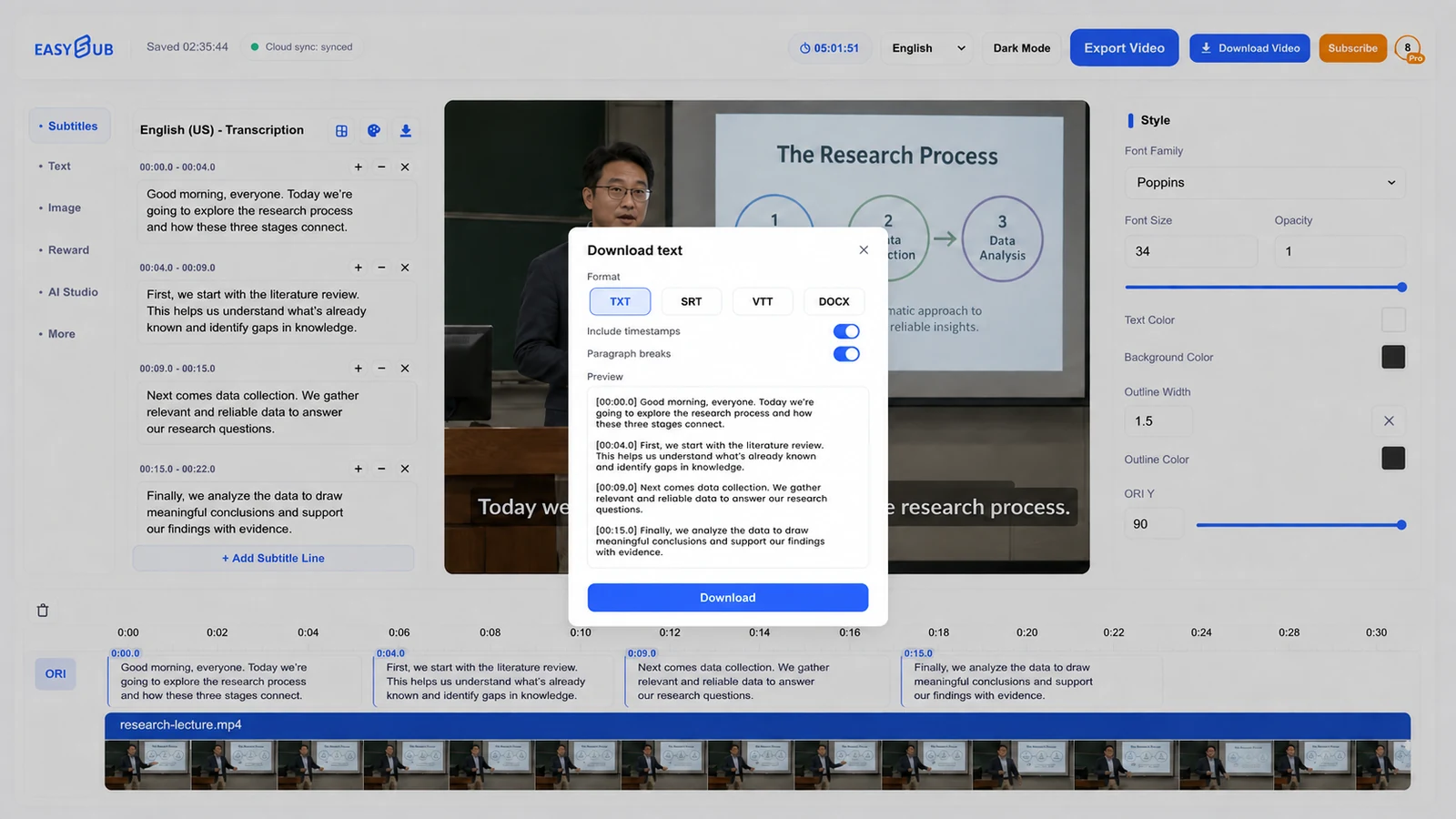
Transcribe Video to Text ကို တိကျသော စာတန်းထိုးများ ဖန်တီးပြီး ပြန်လည်သုံးသပ်ရန် ကူညီပေးရန် ဒီဇိုင်းထုတ်ထားပါသည်။ သင်လုပ်ဆောင်ရန် ခွင့်ပြုချက်ရှိသော ဗီဒီယို သို့မဟုတ် အသံဖြင့် စတင်ပါ၊ အလုပ်လုပ်သော မူကြမ်းတစ်ခု ဖန်တီးပါ၊ ထို့နောက် သုံးသပ်ထားသော စာတန်းထိုးများဖြင့် အဆုံးသတ်ပါ။ အသုံးဝင်သော ရလဒ်မှာ ပထမဆုံး အလိုအလျောက် ထွက်ရှိလာသော ရလဒ် မဟုတ်ပါ။ ၎င်းသည် သင် ရင်းမြစ်နှင့် စစ်ဆေးထားသော ဗားရှင်း ဖြစ်သည်။.
ဗီဒီယိုမှ စာသားသို့ Transcribe ကို အသုံးပြုနည်း
- မှန်ကန်သော ပရောဂျက်ကို ဖွင့်ပါ။. သင်လုပ်ဆောင်ရန် ခွင့်ပြုချက်ရှိသော ဗီဒီယို သို့မဟုတ် အသံဖြင့် စတင်ပါ။ ဖြစ်နိုင်သည့်အခါတိုင်း ချုံ့ထားသောမိတ္တူထက် ရရှိနိုင်သော အရှင်းလင်းဆုံးရင်းမြစ်ကို အသုံးပြုပါ။.
- အလုပ်လုပ်သော မူကြမ်းကို ဖန်တီးပါ။. မူရင်းဘာသာစကားနှင့် သက်ဆိုင်ရာကိရိယာဆက်တင်များကို ရွေးချယ်ပါ။ EasySub ကို ပထမဆုံးတည်းဖြတ်နိုင်သောဗားရှင်းကို ပြင်ဆင်ခွင့်ပေးပါ။.
- ခက်ခဲတဲ့ အပိုင်းတွေကို ပြန်လည်သုံးသပ်ပါ။. အမည်များ၊ နံပါတ်များ၊ အထူးပြုဝေါဟာရများ၊ စပီကာပြောင်းလဲမှုများနှင့် ဂီတ သို့မဟုတ် ထပ်နေသောအသံများ ရှင်းလင်းပြတ်သားမှုကို လျော့ကျစေသည့်နေရာများကို စစ်ဆေးပါ။.
- ပို့ဆောင်ပေးပြီး စမ်းသပ်ပေးပါတယ်။. ပြန်လည်သုံးသပ်ထားသော စာတန်းထိုးများကို ပြင်ဆင်ပြီးနောက် ကြည့်ရှုသူများ အမှန်တကယ်အသုံးပြုနိုင်မည့် player၊ editor သို့မဟုတ် publishing workflow တွင် ဖွင့်ပါ။.
ဒီကိရိယာက ဘယ်နေရာမှာ သင့်တော်လဲ
အသုံးပြုနိုင်သော ဗီဒီယို၊ ဒေသအလိုက်ပြောင်းလဲခြင်းနှင့် ဖန်တီးသူထုတ်ဝေခြင်း။.
သင် စီမံဆောင်ရွက်ရန် ခွင့်ပြုထားသော ဗီဒီယို သို့မဟုတ် အသံ။.
ပြန်လည်သုံးသပ်ထားသော စာတန်းထိုးများ။.
တိကျမှုဆိုတာ ပြန်လည်သုံးသပ်ခြင်းကနေ လာတာပါ။
အလိုအလျောက် စာတန်းထိုးများသည် စက်ပိုင်းဆိုင်ရာ အလုပ်အများစုကို ဖယ်ရှားပေးသော်လည်း အမည်၊ ရည်ညွှန်းချက် သို့မဟုတ် ဖန်တီးမှု ရည်ရွယ်ချက်တိုင်းကို မသိနိုင်ပါ။ မှတ်တမ်းတင်ထားသော အသံဖိုင်ကို ပြန်လည်သုံးသပ်ပါ၊ ဖြတ်တောက်မှုများတွင် အချိန်ကိုက်မှုကို မှန်ကန်စွာ လုပ်ဆောင်ပါ၊ ဖရိမ်၏ အရေးကြီးသော အစိတ်အပိုင်းများကို မဖုံးကွယ်ဘဲ ဖတ်နိုင်လောက်အောင် စာကြောင်းများကို တိုတိုထားပါ။.
အသံဖွင့်ပြီး အသံတိတ်ထားတဲ့ နောက်ဆုံးသီချင်းကို ဒက်စ်တော့နဲ့ မိုဘိုင်းမှာ စမ်းသပ်ကြည့်ပါ။ စပီကာပြောင်းလဲမှု၊ အမည်များ၊ နံပါတ်များ၊ စာကြောင်းခွဲခြင်းများနှင့် အဖွင့်အပိတ် အချိန်တံဆိပ်များကို အတည်ပြုပါ။.
တင်ပို့မှုမပြုမီ အရည်အသွေးစစ်ဆေးရမည့်စာရင်း
| စစ်ဆေးပါ | ဘာကိုရှာရမလဲ | ဘာကြောင့် အရေးကြီးတာလဲ |
|---|---|---|
| အရင်းအမြစ် ကိုက်ညီမှု | အမည်များ၊ နံပါတ်များ၊ အနုတ်လက္ခဏာများနှင့် အထူးပြုအသုံးအနှုန်းများသည် မှတ်တမ်းတင်ခြင်းနှင့် ကိုက်ညီပါသည်။. | စာသားအမှားလေးတွေက အဓိပ္ပာယ်ပြောင်းပြန်ဖြစ်သွားနိုင်ပါတယ်။. |
| အချိန်ကိုက်ခြင်း | စာကြောင်းများသည် စပီကာဖြင့်စတင်ပြီး မျက်နှာပြင်ကို သဘာဝအတိုင်း ချန်ထားခဲ့ပြီး ဆက်စပ်မှုမရှိသော မြင်ကွင်းပြောင်းလဲမှုများကို မဖြတ်သန်းပါ။. | အချိန်ကိုက်ခြင်းက စာဖတ်အားကို လျော့ကျစေပါတယ်။. |
| ဖတ်နိုင်မှု | စာကြောင်းခွဲခြင်းသည် သဘာဝကျပြီး စာသားသည် တိုတိုတုတ်တုတ်ဖြစ်ပြီး စာတန်းများတွင် မရှိမဖြစ်လိုအပ်သော ရုပ်ပုံများကို မပါဝင်ပါ။. | ကြည့်ရှုသူများသည် စာကြောင်းတစ်ကြောင်းချင်းစီကို နားလည်ရန် အချိန်နှင့် နေရာလိုအပ်သည်။. |
| နောက်ဆုံးလွှဲပြောင်းပေးအပ်ခြင်း | ဘာသာစကား၊ ဖိုင်အမည်၊ ဖော်မတ်နှင့် ဦးတည်ရာဖွင့်ခြင်းကို စမ်းသပ်ပြီးပါပြီ။. | မှန်ကန်သော မူကြမ်းတစ်ခုသည် မှားယွင်းသော ပေးပို့မှုပုံစံဖြင့်ပင် မအောင်မြင်နိုင်ပါ။. |
ပြန်လည်သုံးသပ်နိုင်သော မူကြမ်းဖြင့် စတင်ပါ
EasySub အလုပ်ခွင်ကိုဖွင့်ပြီး ပထမဆုံးဗားရှင်းကို ဖန်တီးပြီးနောက် ပေးပို့ခြင်းမပြုမီ ရင်းမြစ်နှင့် စစ်ဆေးပါ။.