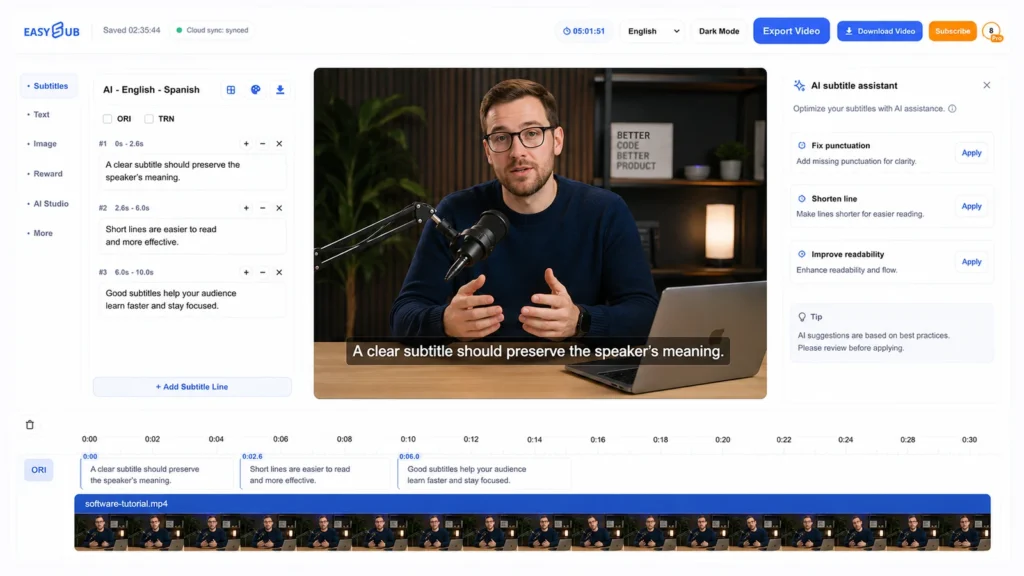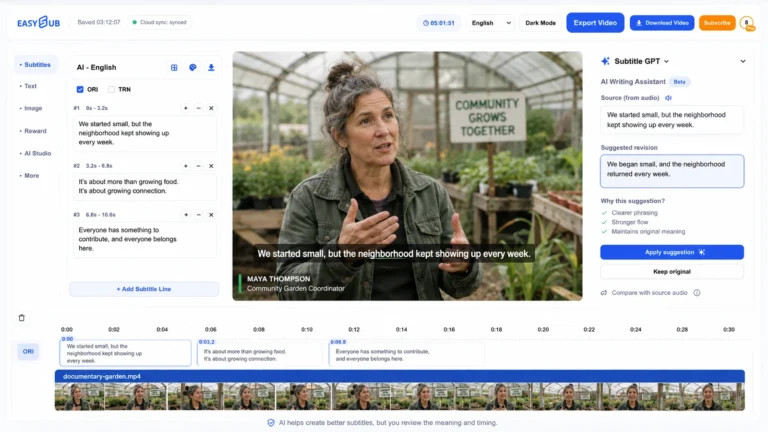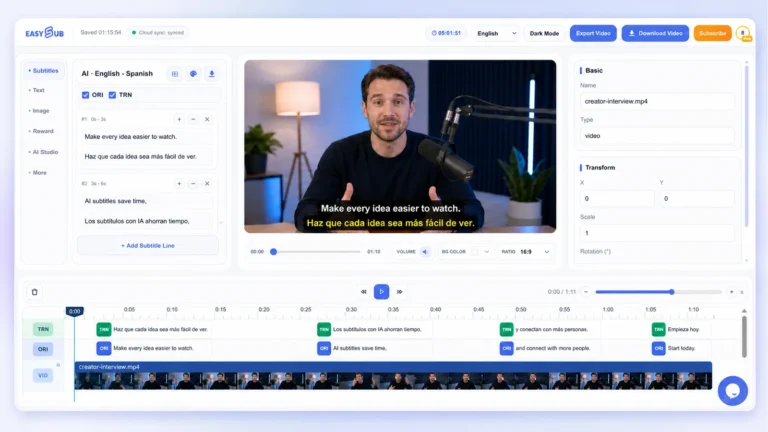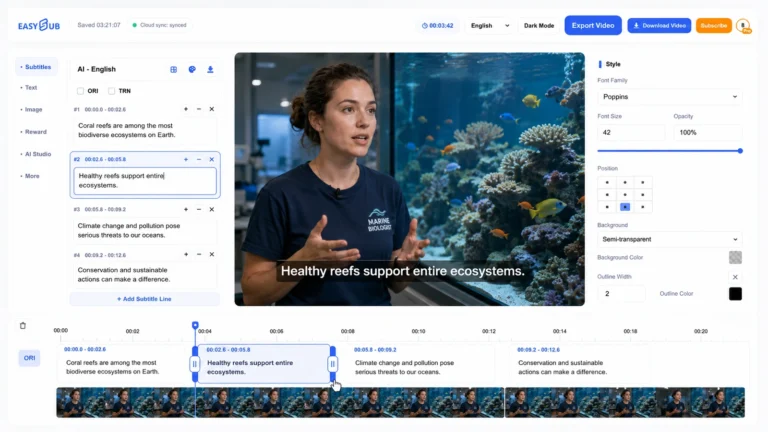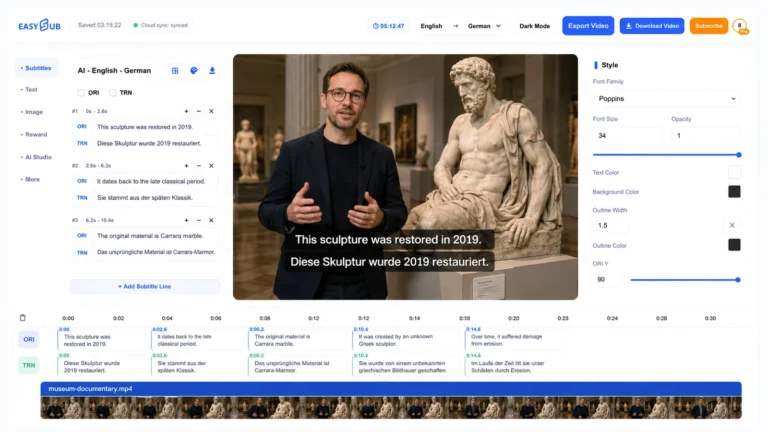
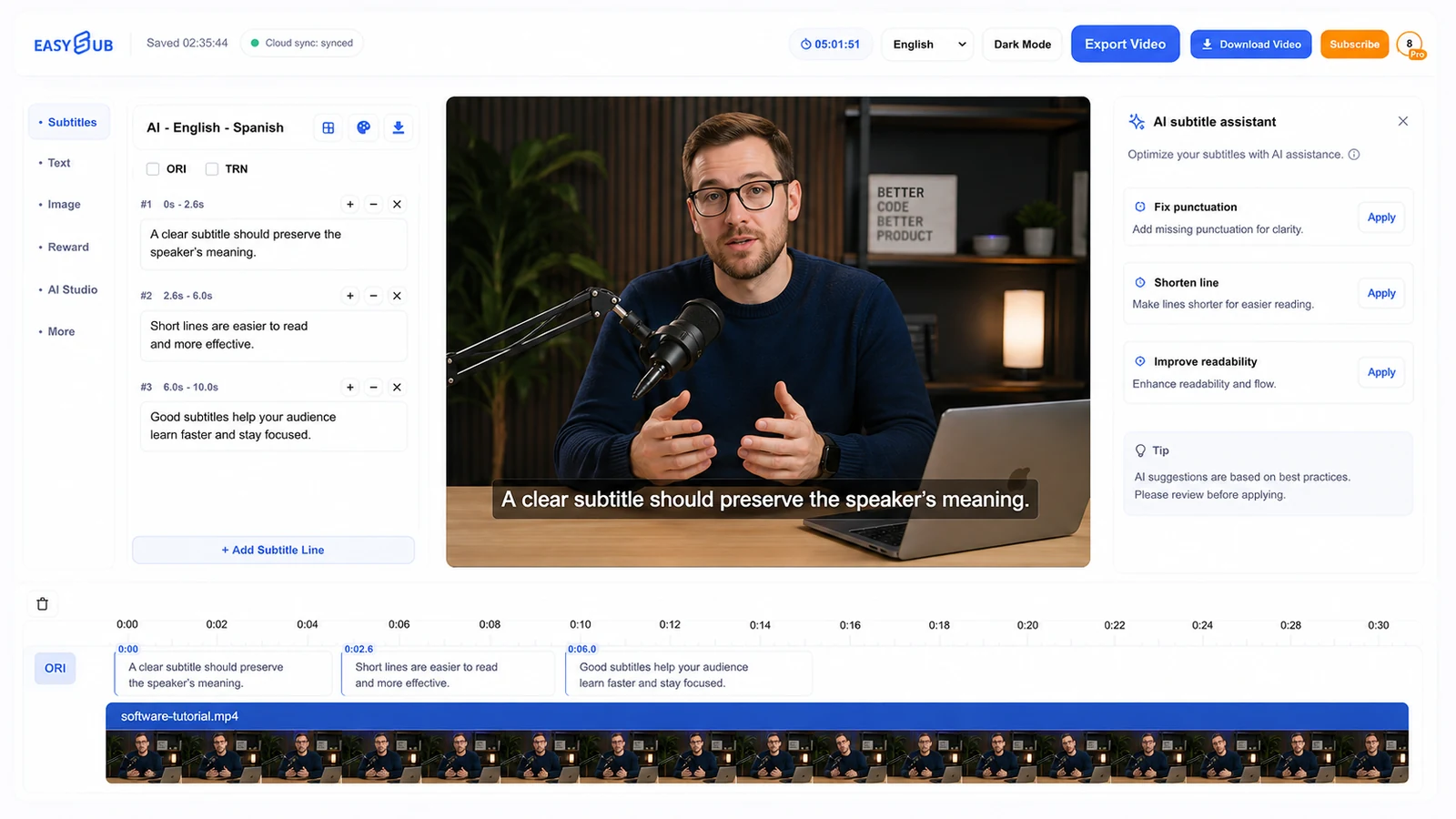
EasySub turns video or audio into editable, timed subtitles; ChatGPT or another language model can be used as an optional writing assistant for wording, punctuation, shortening and translation review. Upload a file or paste any YouTube/video URL, choose the language actually spoken, generate the timed draft, review it against the recording, and download SRT, VTT, ASS or TXT.
How to generate timed subtitles for video
- Add the source. Open the EasySub subtitle workspace, upload video or audio from your device, or paste any YouTube/video URL.
- Choose the spoken language. Select the language that is actually heard in the recording. If you also need another language, turn on Add translation and choose the target language before generation.
- Generate and review the timed draft. Listen again while checking names, numbers, negatives, technical terms, speaker changes and places where music or overlapping speech reduce clarity. Edit text and timing in the workspace.
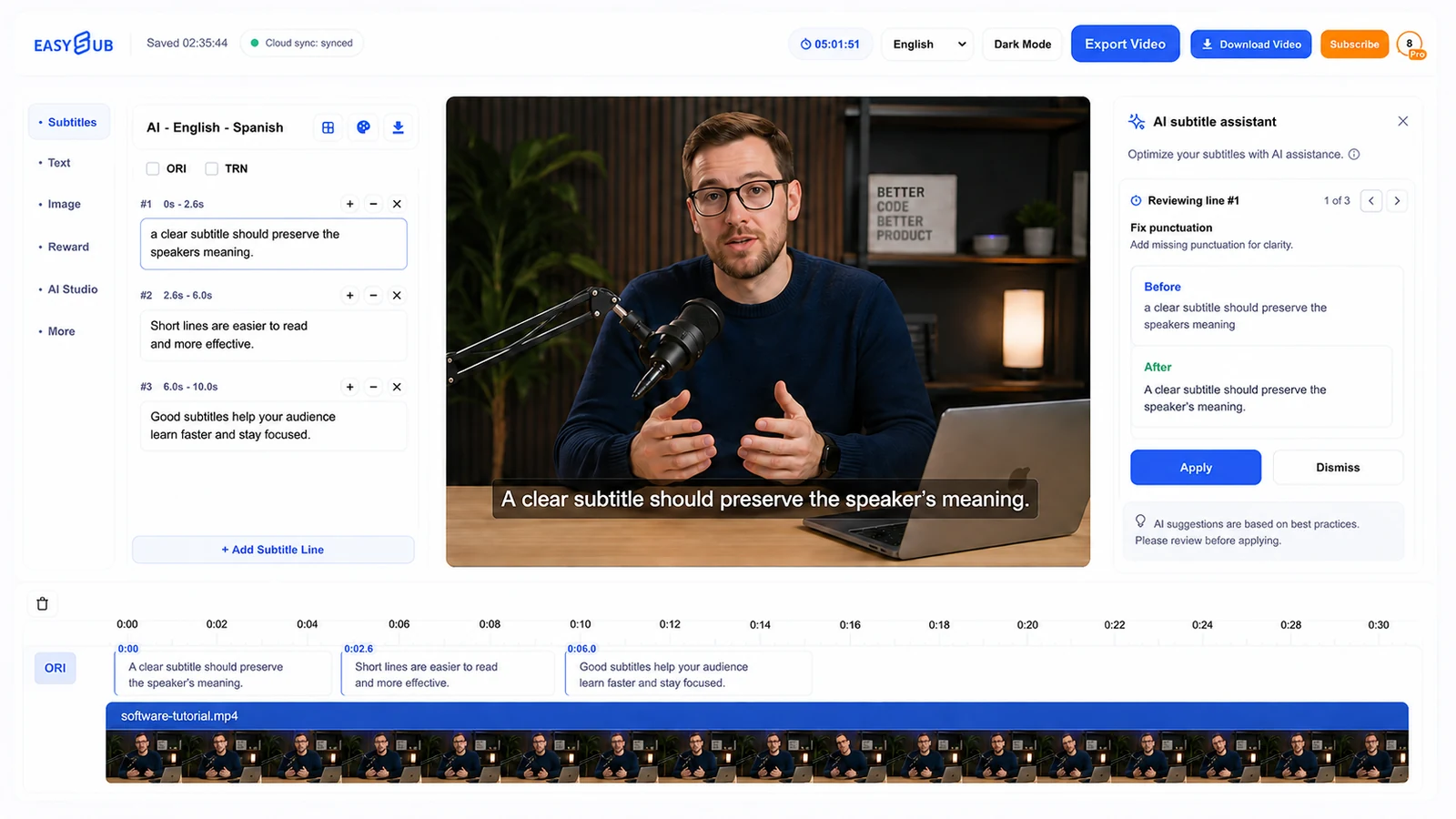
- Use language assistance carefully. Ask for punctuation, shorter phrasing or translation suggestions only after you have a reliable source transcript. Compare every material rewrite with the spoken line so the meaning and tone do not drift.
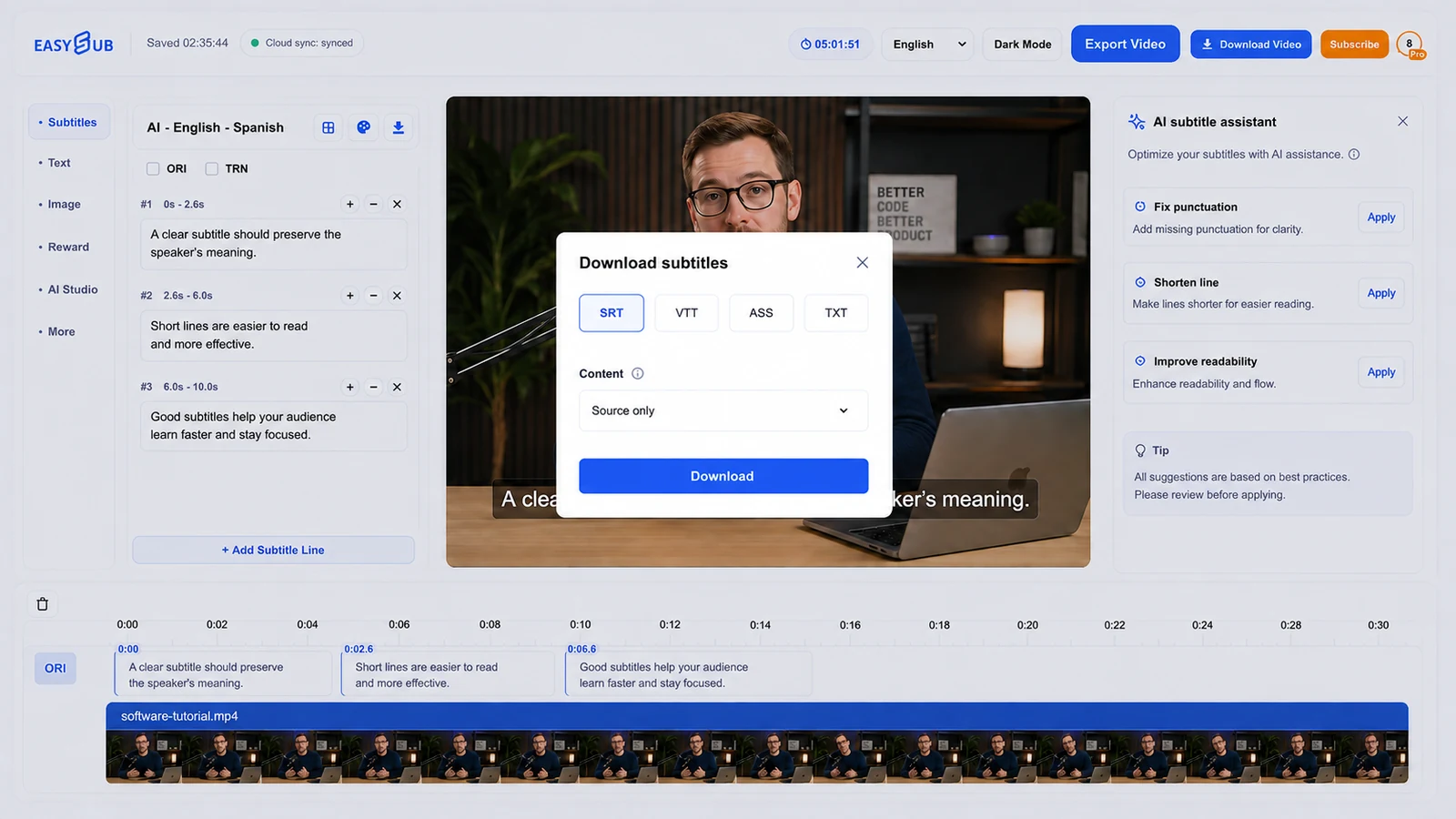
- Download and test. Export SRT, VTT, ASS or TXT, or render a captioned video. When source and translation tracks exist, choose source only, translated only or bilingual content, then test the result in its destination.
Can ChatGPT generate subtitles by itself?
ChatGPT can help draft, rewrite or translate subtitle text, but text alone is not a finished subtitle file. A usable subtitle track needs valid timestamps, cue order, readable line breaks and synchronization with the recording. It also needs a human check because a fluent rewrite can still change a name, number, negative, quotation or technical claim.
For a video-first workflow, generate the timed source track in EasySub, correct it while listening to the media, and use language-model suggestions only for clearly defined text tasks. Do not replace an uncertain transcript with a plausible sentence that was never spoken.
EasySub creates the timed track
The subtitle workspace connects the recording to editable caption cues. It gives you the timing context needed to correct starts, endings, line breaks and scene changes.
ChatGPT can assist with text
Language assistance is most useful for punctuation, concise phrasing, terminology consistency, summaries and translation alternatives after the source transcript is reliable.
Human review approves the result
The editor must compare important changes with the recording, preserve the speaker’s meaning and test the final subtitle file or captioned video.
How to use ChatGPT with an SRT subtitle file
If you use ChatGPT to help rewrite or translate SRT text, keep cue numbers and timestamps unchanged unless you intend to retime the track. Work in short, reviewable sections; tell the assistant not to add facts, names or explanations; and compare the returned wording with the source text and recording. A syntactically valid SRT can still be inaccurate or unreadable.
| Task | Useful instruction | Required check |
|---|---|---|
| Punctuation | Correct punctuation and capitalization without changing words, names or cue timestamps. | Listen to pauses and sentence endings; automatic punctuation can split the speaker’s thought incorrectly. |
| Shortening | Suggest a shorter caption that preserves every fact, number and negative. | Compare meaning and tone with the original line before accepting the rewrite. |
| Translation | Translate only the caption text, preserve cue order and do not alter timecodes. | Review terminology, pronouns, cultural context and whether the translation fits the available reading time. |
| Consistency | Use an approved glossary for names, products and specialist terms. | Confirm each occurrence against the recording and your official terminology list. |
Do not paste confidential interviews, customer recordings or protected material into a separate service without checking consent, privacy terms and your organization’s data-handling rules.
Generate and translate subtitles in 150+ languages
EasySub supports subtitle generation and translation workflows across more than 150 languages. The correct setup depends on what the recording contains: choose the language actually spoken as the source, then add a target language only when you need translation. Selecting the desired output language as the source will not correctly describe a recording spoken in another language.
Language coverage does not mean identical accuracy for every accent, dialect, recording condition or specialist domain. Clear audio, the correct source-language choice and a terminology list improve the first draft, but names, numbers, code-switching and overlapping speakers still need review.
ChatGPT subtitles for YouTube and video URLs
Paste any YouTube or video URL into the input field, choose the spoken language and generate a timed subtitle draft. If the video needs translated captions, enable translation and select the target language before processing. You can then review source and translation tracks separately.
EasySub does not automatically publish the result to your YouTube channel. Download the reviewed subtitle file or export a captioned video, then upload it through your normal publishing workflow.
Which subtitle output should you choose?
| Output | What it contains | Use it when |
|---|---|---|
| SRT | Numbered subtitle cues with start and end timestamps in a widely supported text format. | You need a separate caption file for YouTube, an editor, a course platform or a compatible player. |
| VTT | Timed WebVTT captions for web-based playback. | Your website or online player specifically requests VTT. |
| ASS | Timed subtitle text with additional styling information. | Your player or editing workflow supports ASS styling. |
| TXT | Readable transcript text without subtitle timestamps. | You need text for notes, editing or language assistance rather than a synchronized subtitle track. |
| Captioned video | A rendered video with the selected captions visible in the picture. | You want the words to remain visible without loading a separate subtitle file. |
When a project contains both source and translated subtitles, choose source only, translated only or bilingual according to the destination. Bilingual captions need extra review because two language tracks can cover more of the frame and increase reading load.
Subtitle quality checklist before export
Match the recording
Check names, numbers, quotations, negatives and specialist vocabulary. Fluent language is not proof that the words match the source.
Check timing
Start captions with the speaker, remove them naturally and avoid carrying a line through an unrelated cut or speaker change.
Protect readability
Use natural line breaks, keep text concise and make sure captions do not hide faces, labels or other essential visuals.
Test the destination
Open the final file on desktop and mobile in the real player or editor. Confirm characters, line order, language, timing and opening and closing cues.
Is the ChatGPT subtitle generator free?
You can open the sample subtitle editor to inspect the workflow before creating a project. Available processing time, models and export options depend on the current account balance and plan; “start for free” does not mean unlimited transcription or translation. Check the current pricing page before processing long recordings.
For straightforward automatic captions, use the AI subtitle generator. To refine an existing subtitle draft with guarded language suggestions, see Subtitle GPT. For source-to-target localization, use the subtitle translator.
Create a timed subtitle draft
Add a file or any YouTube/video URL, choose the correct source and target languages, review text and timing, and export the subtitle format you need.