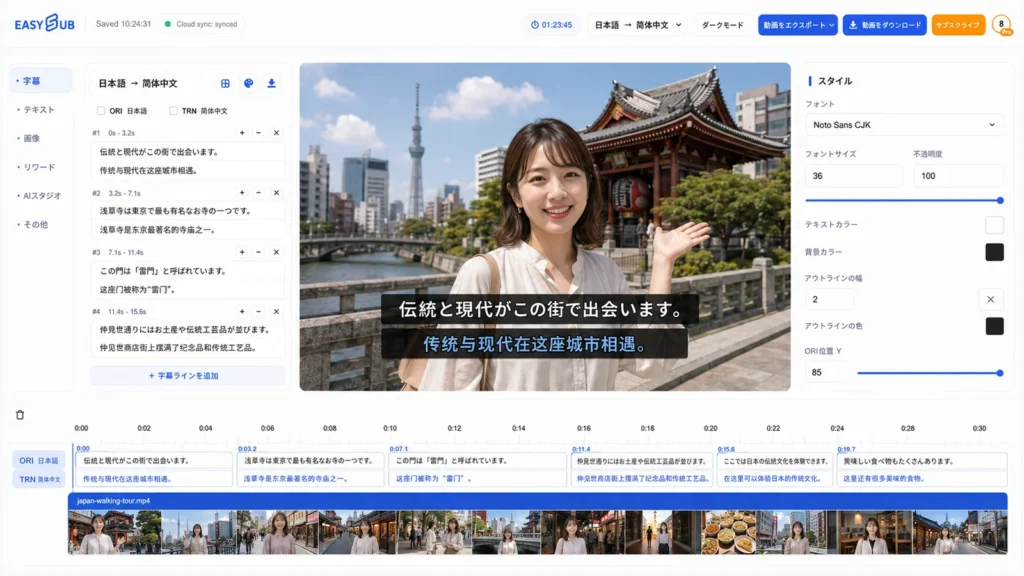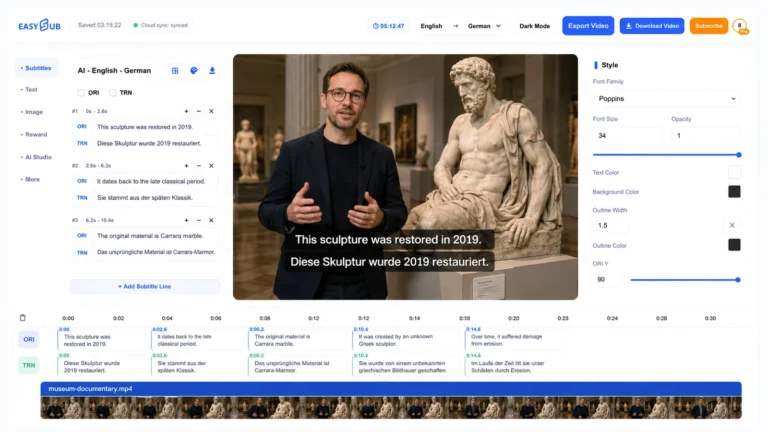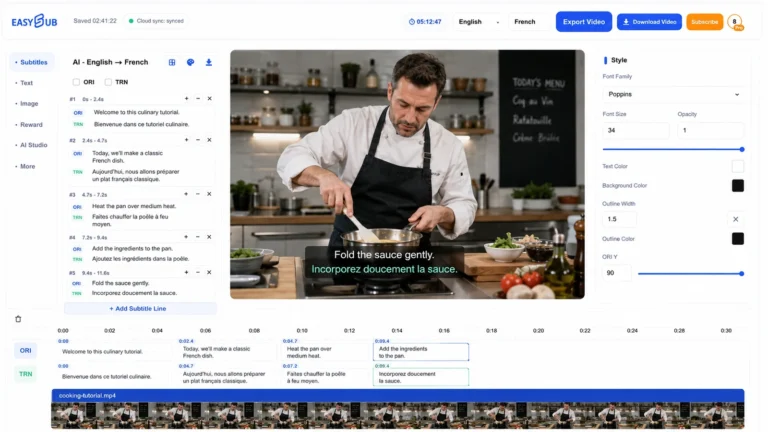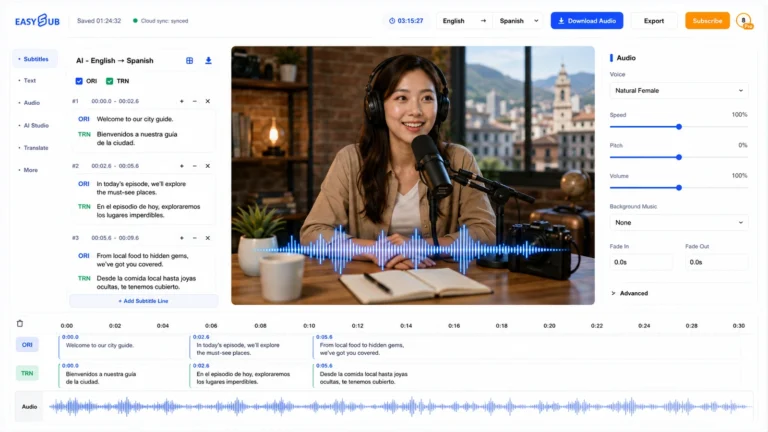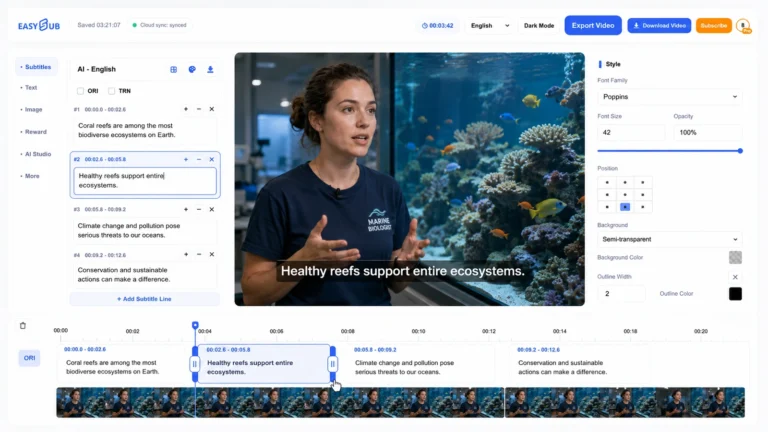
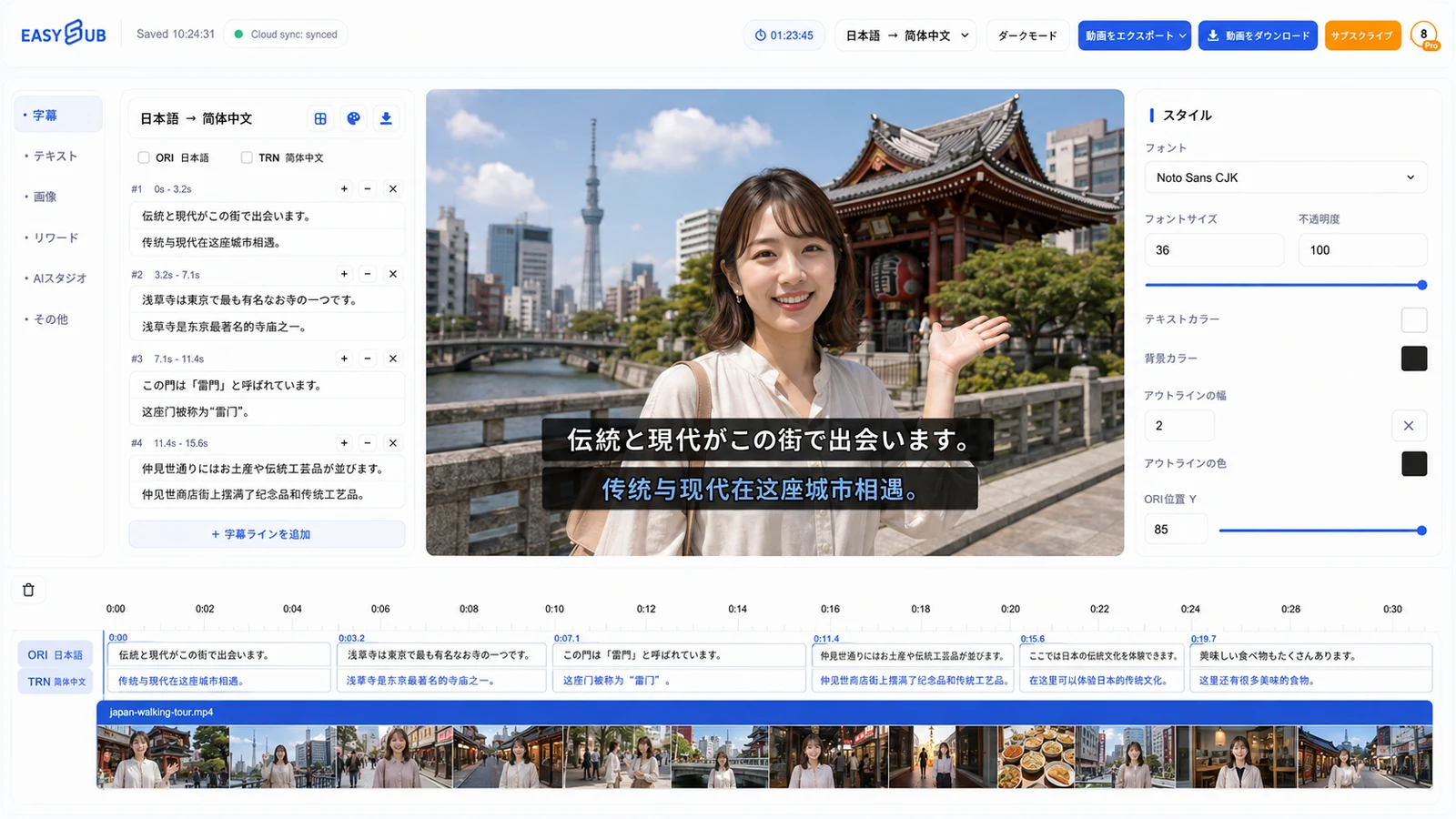
Japanese to Chinese is designed to help you create and review accurate subtitles. Start with video or audio you are authorized to process, create a working draft, and finish with reviewed subtitles. The useful result is not the first automated output; it is the version you have checked against the source.
How to use Japanese to Chinese
- Open the right project. Start with video or audio you are authorized to process. Use the clearest available source rather than a compressed copy whenever possible.
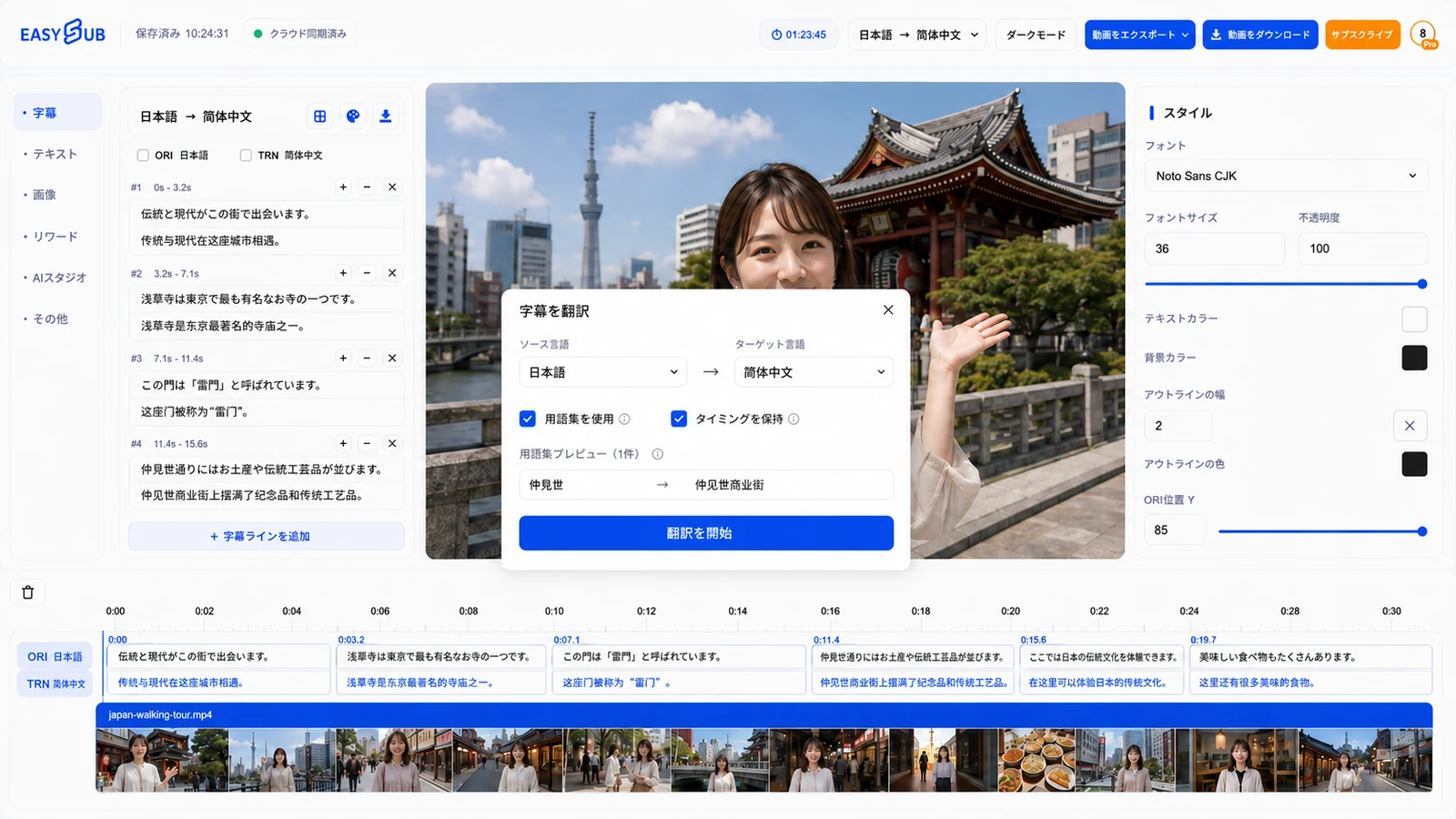
- Create the working draft. Choose the source language and the relevant tool settings. Let EasySub prepare the first editable version.
- Review the difficult parts. Check names, numbers, specialist terms, speaker changes and places where music or overlapping voices reduce clarity.
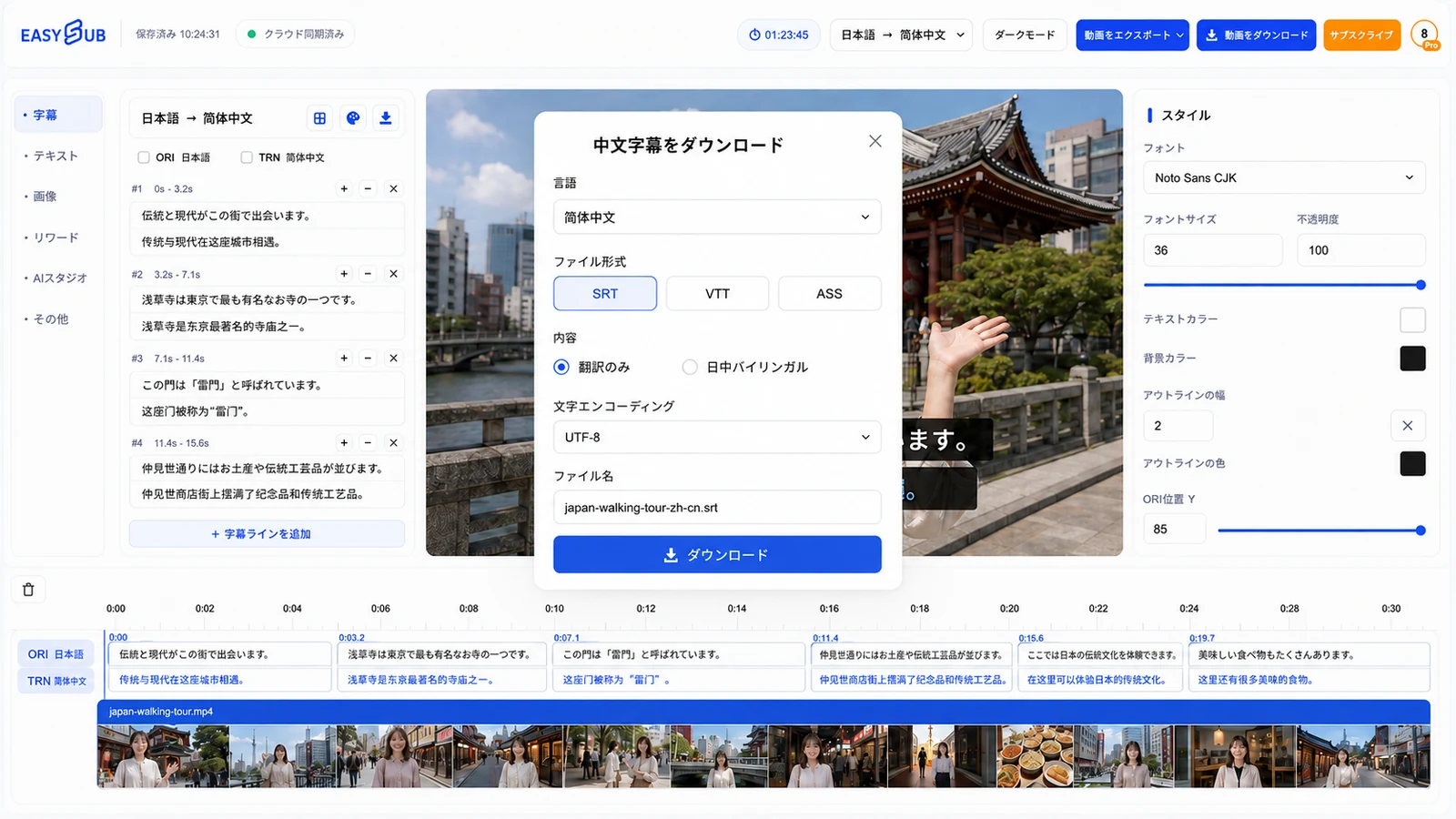
- Deliver and test. Prepare reviewed subtitles, then open it in the player, editor or publishing workflow where viewers will actually use it.
Where this tool fits
accessible video, localization and creator publishing.
Video or audio you are authorized to process.
Reviewed subtitles.
Accuracy comes from review
Automatic subtitles remove much of the mechanical work, but they cannot know every name, reference or creative intention. Review against the recording, correct timing around cuts, and keep lines short enough to read without hiding important parts of the frame.
Test the final track on desktop and mobile, with sound on and muted. Confirm speaker changes, names, numbers, line breaks and the opening and closing timestamps.
Quality checklist before export
| Check | What to look for | Why it matters |
|---|---|---|
| Source match | Names, numbers, negatives and specialist terms agree with the recording. | Small transcription errors can reverse meaning. |
| Timing | Lines begin with the speaker, leave the screen naturally and do not run through unrelated scene changes. | Good timing reduces reading effort. |
| Readability | Line breaks are natural, the text is concise and captions do not cover essential visuals. | Viewers need time and space to understand each line. |
| Final handoff | The language, file name, format and destination playback have been tested. | A correct draft can still fail in the wrong delivery format. |
Start with a reviewable draft
Open the EasySub workspace, create the first version, then check it against the source before delivery.